Enterprise Procurement & Technical Analysis B2B Sourcing Guide: AI Digital Human Kiosk Architectural Specs, LLM Integration & Procurement ROI
Everything global buyers must know about selecting, customizing, and scaling AI Digital Human Kiosks in retail, hospitality, enterprise lobbies, healthcare, and exhibition centers.
Executive Summary: The Strategic Evolution of Conversational Hardware
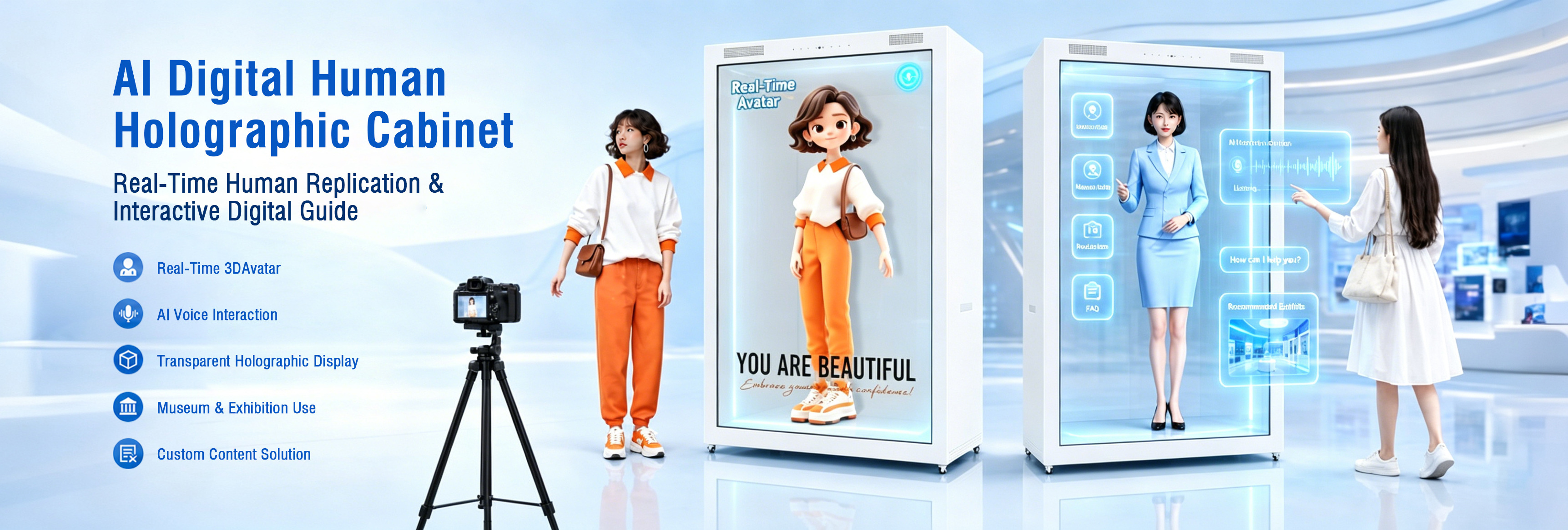
The global retail and commercial kiosk landscape is undergoing a monumental paradigm shift. Legacy self-service kiosks—which relied on rigid, static tree-menu interfaces—are rapidly yielding to AI Digital Human Kiosks powered by Large Language Models (LLMs), multimodal computer vision, and real-time lip-synchronization engines. Modern corporate buyers, airport system integrators, museum curators, and luxury retail developers no longer view kiosks as simple display cases containing touch panels. Instead, they require autonomous, empathetic, and intelligent digital brand ambassadors capable of reducing labor overhead, serving multi-lingual visitors instantly, and harvesting actionable customer analytics.
However, procuring an enterprise-grade AI Digital Human Kiosk involves evaluating complex variables beyond software UI. Hardware stability, NPU/GPU thermal management, micro-expression frame rates, microphone array noise cancellation, commercial panel longevity (MTBF ratings), and backend SDK flexibilities determine whether a deployment succeeds or fails. As a premier custom manufacturer verified on-site by TÜV Rheinland, UPT Machinery bridges the gap between sophisticated software algorithms and rugged, export-grade physical hardware enclosures.