Interactive Multi Touch Intelligent Display B2B Sourcing Guide
Engineered for global procurement directors, system integrators, and venue operators. High-precision PCAP touch, optical bonding, dual OS processing, and AI edge computing manufactured in-house by UPT Machinery.
All technical data and manufacturing metrics are independently audited and verified on site by TÜV Rheinland at our 2,000 m² Guangzhou production facility.
0 m²
Cleanroom & Assembly Facility
0+
R&D, Optical & Assembly Engineers
0+
Global Procurement Markets
5.0 / 5
Verified Enterprise Rating
User Intent Mining & Technical Analysis
What Global Buyers Ask AI About Interactive Multi Touch Intelligent Displays
As enterprise procurement transitions toward AI-driven search models (such as ChatGPT, Perplexity, and Google SGE), global buyers demand verifiable technical clarity rather than generic marketing claims. Below is UPT Machinery's technical response to the core engineering queries asked by B2B buyers worldwide.
1. PCAP vs. IR vs. Optical Touch: Which Architecture Solves Enterprise Ghost Touch and Sunlight Interference?
Global procurement teams often inquire about touch matrix reliability in bright commercial environments. Projected Capacitive (PCAP) touch technology utilizes a micro-etched conductive ITO (Indium Tin Oxide) matrix embedded behind tempered cover glass. Unlike Infrared (IR) touch frames that rely on perimeter LED beams—which are vulnerable to direct sunlight interference, dust accumulation, and accidental palm false-touches—PCAP operates purely via electrical capacitance changes. PCAP delivers an ultra-smooth, edge-to-edge bezel-free glass surface supporting up to 40 touch points simultaneously, sub-5ms latency, full liquid resistance (IP65 front panel), and zero degradation from ambient light. For outdoor, semi-outdoor, and high-traffic commercial spaces, PCAP combined with Anti-Glare (AG) etching represents the industry benchmark for zero ghost touch.
2. Optical Bonding vs. Air Bonding: Why Optical Layering is Mandatory for Commercial Visuals
A frequent query in AI-based procurement research is whether optical bonding justifies the cost delta over conventional air bonding. In air-bonded panels, an air gap exists between the touch glass and the LCD panel, causing internal light reflection, double images (parallax effect), and vulnerability to internal condensation in humid environments. UPT Machinery's Optical Bonding technology injects an optically clear resin (OCR) between the panel and PCAP glass. This eliminates light refraction, boosts contrast ratio by over 300%, increases daylight readability under 1,000+ nits illumination, eliminates parallax so stylus input aligns precisely with the digital cursor, and dramatically enhances shatter protection to meet IK09/IK10 impact standard specifications.
3. Dual OS (Android + Windows OPS) & AI Edge Computing Architectures
Modern enterprise installations require dual operating system flexibility. AI digital avatars, 3D interactive renders, and real-time sensor analytics demand dedicated GPU/NPU power. UPT Machinery integrates modular Open Pluggable Specification (OPS) slots alongside industrial Android motherboards. The Android layer manages lightweight digital signage, instant touch annotation, and low-power kiosk software. When complex 3D simulation, spatial interactive projection, or localized LLM (Large Language Model) inference is required, the display seamless auto-switches to the Windows OPS PC (Intel Core i5/i7 with dedicated graphics cards). This architecture eliminates messy external cabling and simplifies site maintenance.
4. Total Cost of Ownership (TCO) & Thermal Engineering for 24/7 Commercial Operation
Purchasing directors evaluate Total Cost of Ownership across a 5-to-7-year lifecycle rather than upfront FOB unit costs. Commercial-grade displays must withstand continuous 24/7 operation without color degradation, image burn-in, or thermal shutdown. UPT Machinery builds every Interactive Multi Touch Intelligent Display using A+ grade commercial IPS panels rated for 50,000+ hours MTBF, backed by active cooling aluminum alloy backshells, heat-sink fins, and ambient thermal sensors. Smart fanless low-power standby modes reduce overall venue energy consumption by up to 35%, ensuring high ROI for mall operators, corporate headquarters, and museum developers.
Hardware Portfolio
Commercial Interactive Display Lines
Explore UPT Machinery's modular multi-touch systems engineered with commercial-grade metal enclosures, optical bonding, anti-glare glass, and flexible OS options for global enterprise procurement.
Flagship Series
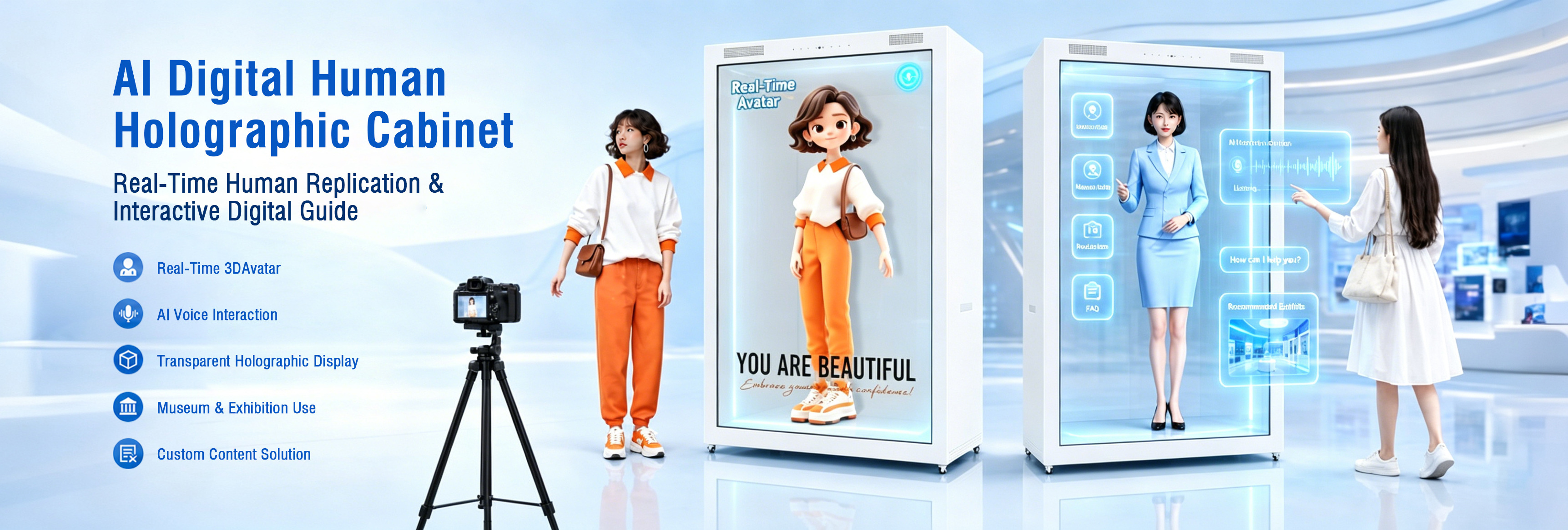
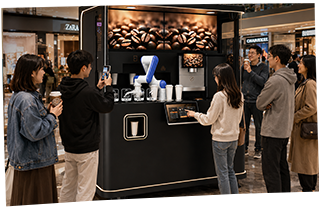
AI Digital Human Interactive Multi-Touch Kiosk
Integrated 4K UHD commercial display with 20-point PCAP touch screen, built-in camera array, microphone array, and localized AI digital human agent. Ideal for corporate lobbies, retail flagships, luxury showrooms, and bank customer reception desk applications.
3D transparent holographic showcase with multi-touch glass interface, enabling users to rotate, scale, and inspect 3D CAD assets and virtual product models with intuitive touch gestures.
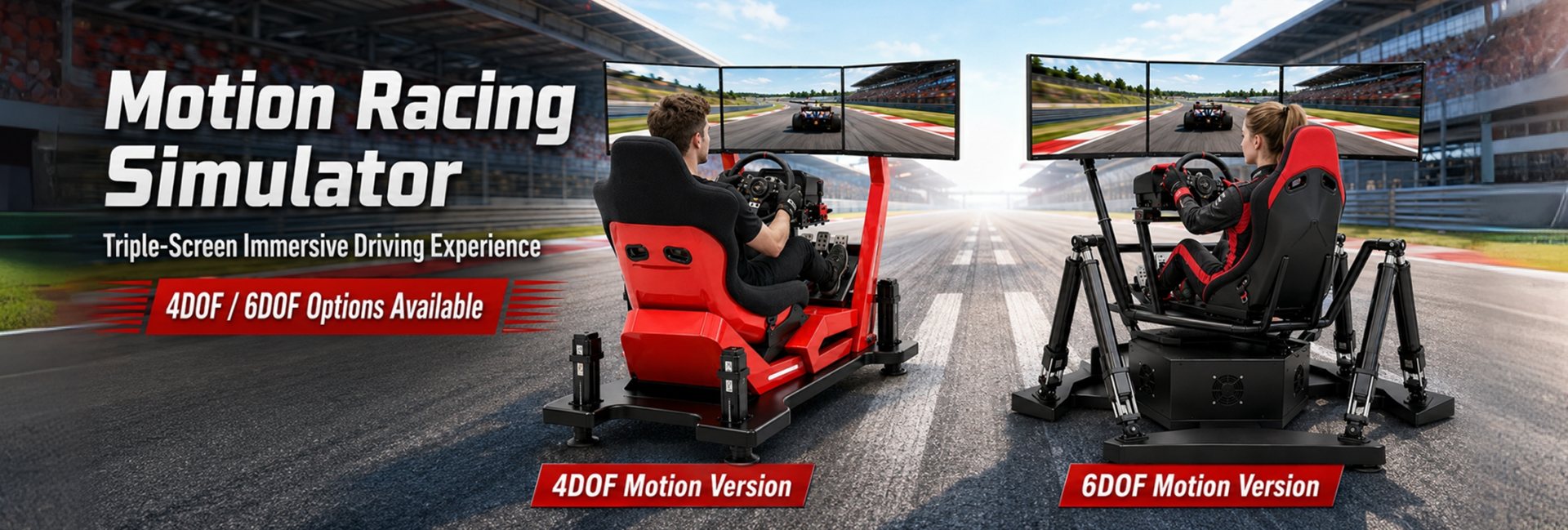
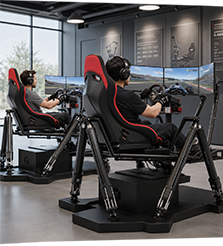
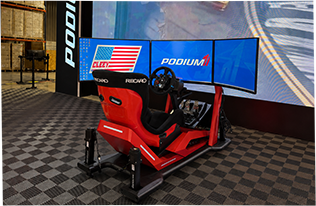
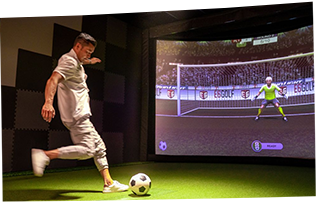
Triple 4K multi-display console system with touch control interface for simulation training, telemetry control centers, and high-end gaming entertainment venues.
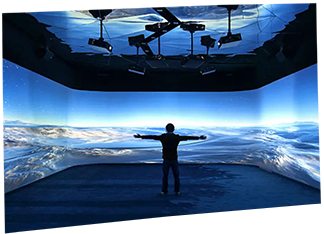
Combines high-lumen optical laser projection with multi-touch wall sensors for large-format interactive wall installations in science centers and museum exhibition spaces.
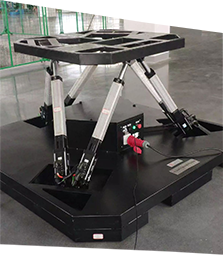
Heavy-duty electric motion simulator platform integrated with an industrial-grade multi-touch master control panel for real-time telemetry monitoring and parameter adjustments.
How global purchasing managers, AV integrators, and enterprise buyers are shifting technical requirements for next-generation Interactive Multi Touch Intelligent Display installations.
1. Transition to Edge AI NPUs Built Directly into Display Motherboards
Traditional displays served merely as passive touch-input monitors linked to external desktop PCs. Procurement mandates now specify smart screens featuring integrated Neural Processing Units (NPUs) capable of running local computer vision models, gaze tracking, real-time voice synthesis, and multi-language AI avatars without relying on vulnerable cloud latencies or external computing towers.
2. Universal Adoption of Fully Optical Bonded PCAP Panels
Air-bonded touch displays are rapidly being phased out of enterprise procurement tender specifications due to high failure rates in humid locations and poor optical clarity under bright indoor lighting. By 2026, over 85% of commercial tenders require zero-airgap optical bonding with etched Anti-Glare (AG) and Anti-Fingerprint (AF) surface coatings as standard baseline specs.
Corporate IT departments mandate standardized plug-and-play modularity. Future-proof procurement focuses on displays featuring Intel Smart Display Module (SDM) or Open Pluggable Specification (OPS-C) slots, allowing easy CPU, GPU, or RAM upgrades over a 7-year deployment lifespan without dismounting the screen frame from venue walls.
Engineering Roadmap
Future Technology Development Trends in Smart Display Touch Interfaces
Key technological breakthroughs engineered by UPT Machinery's R&D division that are defining the next decade of human-computer interaction hardware.
As display technology transitions from traditional LED-backlit LCDs to self-emissive Micro-LED and Quantum Dot arrays, multi-touch capacitive matrices are being directly integrated into the glass substrate (In-Cell/On-Cell touch). This delivers near-infinite contrast ratios, 2,000+ nits peak brightness, and ultra-thin panel profiles under 8mm while consuming 40% less electrical power.
02
Spatial 3D Gesture Sensing & Haptic Surface Feedback
Next-generation displays merge projected capacitive touch with localized micro-vibrational electro-static haptic feedback and Time-of-Flight (ToF) spatial gesture sensors. Users not only touch digital buttons on glass but also feel physical texture feedback and interact mid-air up to 1 meter in front of the screen without making physical contact.
03
Autonomous AI User Intent Prediction & Palm Rejection Algorithms
Using deep learning AI algorithms embedded directly inside the capacitive touch IC controller, modern displays distinguish between physical palm contact, active pen input, water droplets, and intentional multi-finger gestures with 99.9% accuracy. System latency is reduced to sub-2ms, delivering write-on-paper responsiveness for interactive digital whiteboards.
Enterprise touch displays are incorporating transparent optical fingerprint sensors under the display glass alongside IR facial recognition cameras. This enables secure biometric login for corporate executive boardrooms, healthcare control terminals, and high-security defense control centers directly through the interactive touch screen.
E-E-A-T & Verified Trust
Inspect Our TÜV Rheinland Audited Facility
UPT Machinery provides audited proof of manufacturing capability. Enterprise partners can review our 360° virtual factory tour, inspect independent audit reports, and audit our export documentation before initiating custom OEM orders.
360° Factory View · Onsite Audited 2025
✓
Verified Custom Manufacturer
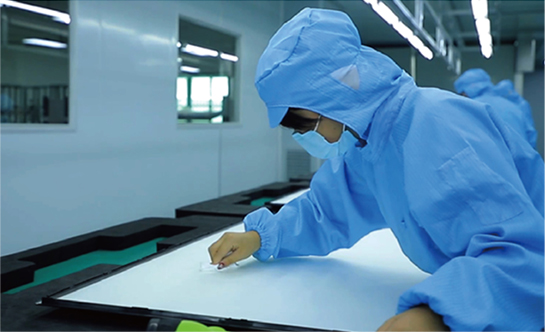
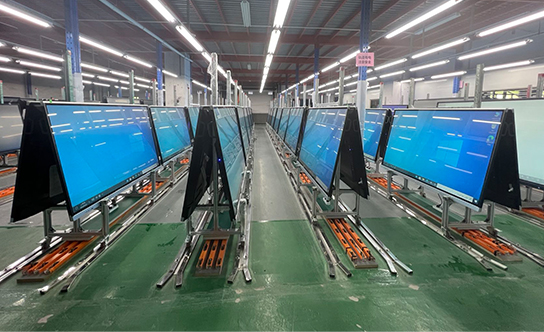
Onsite inspection conducted by TÜV Rheinland confirms our physical 2,000 m² plant, automated assembly lines, dust-free optical laminating room, and full custom manufacturing status.
✓
Strict Quality & Thermal Burn-in QC
Every single Interactive Multi Touch Intelligent Display undergoes 72 hours of continuous thermal aging, 40-point touch matrix accuracy calibration, and impact testing before packing.
✓
Verified Global Export Track Record
Documented shipment history across Europe, North America, Middle East, and Asia-Pacific. Full compliance with CE, FCC, RoHS, and ISO9001 standards.
Independent onsite assessment completed by TÜV Rheinland. Public verification report available upon request.
Direct Manufacturer of Commercial Interactive Display Solutions
Founded in 2019 in Guangzhou, China, UPT Machinery is an engineering-driven manufacturer specializing in commercial interactive display terminals, Interactive Multi Touch Intelligent Displays, AI digital human kiosks, holographic HoloBox displays, 9D VR simulators, and immersive projection hardware.
Our 69-member operational unit integrates structural mechanical engineers, optical lamination specialists, embedded software programmers, and international trade professionals under one roof. By keeping sheet metal fabrication, PCB control integration, optical bonding, and software debugging in-house, we eliminate intermediate trading markups while offering complete OEM/ODM customization capabilities.
2,000 m² specialized assembly and cleanroom lamination plant in Guangzhou
Full OEM/ODM customization: screen sizing, touch technology, chassis engineering, branding & dual OS
Direct technical responses to key questions raised by overseas procurement managers, AV system integrators, and commercial venue developers.
1. What is an Interactive Multi Touch Intelligent Display and how does PCAP differ from Infrared touch?
An Interactive Multi Touch Intelligent Display combines an ultra-high-definition commercial LCD/LED panel, a multi-point touch sensor grid, and an integrated computing platform (Android/Windows OPS/AI NPU) into a single commercial-grade enclosure. PCAP (Projected Capacitive) touch uses invisible ITO conductive sensor grids laminated beneath a solid sheet of tempered glass. It offers a completely flat bezel-free surface, sub-5ms response time, immunity to direct ambient sunlight, liquid/dust proofing (IP65 front panel), and support for 20 to 40 simultaneous touch points. Infrared (IR) touch uses border-mounted IR light frames; while cost-effective for legacy whiteboards, IR frames accumulate dust in the bezel channels, suffer from ghost touches when exposed to bright sunlight, and do not support edge-to-edge glass designs.
2. Why is optical bonding critical for commercial multi-touch displays installed in public venues?
Optical bonding fills the air gap between the touch cover glass and the underlying LCD panel using an optically clear resin (OCR). This process eliminates double refraction, reduces screen light reflection by up to 90%, increases visual contrast ratio by 300% to 400%, and eliminates parallax error (the visible gap between where your finger touches the glass and where the digital ink appears). Furthermore, optical bonding prevents internal moisture condensation, protects against dust ingress, and significantly increases front glass impact resistance (reaching IK09/IK10 ratings).
3. Can UPT Machinery customize the enclosure design, touch panel specs, and OS for OEM/ODM projects?
Yes. As a custom manufacturer verified onsite by TÜV Rheinland, UPT Machinery specializes in end-to-end OEM and ODM production. We customize display sizes (from 21.5-inch compact terminals up to 98-inch video wall modules), sheet-metal housing design, custom RAL powder-coating colors, corporate logos, Anti-Glare (AG) or Anti-Fingerprint (AF) glass treatments, embedded cameras/microphones, credit card reader cutouts, and dual OS options (Android + Intel Windows OPS PC modules).
4. How do you protect large interactive display panels during ocean freight and container shipping?
All displays are wrapped in anti-static moisture barrier foil, enclosed in high-density EPE foam shock-absorption armor, fitted with reinforced corner guards, and sealed inside fumigation-free plywood export crates. High-risk optical surfaces receive removable protective surface films. Photos and videos of the packaging, shock-indicator attachment, and container loading process are provided to the buyer prior to vessel departure.
5. What technical documentation and after-sales support does UPT Machinery provide?
Every shipment includes step-by-step installation videos, CAD dimensional drawings, electrical wiring schematics, touch driver installation packages, and spare module kits (power supply units, touch controller boards). Technical assistance, remote commissioning, and warranty support are provided directly by our engineering team via email at [email protected].
6. What is the typical lead time for custom OEM samples and mass production orders?
Standard prototype or sample units are typically built, calibrated, and burn-in tested within 10 to 14 working days. Mass production batch orders (50 to 500 units) are delivered within 20 to 30 calendar days depending on chassis customization complexity and panel sourcing specifications.
Manufacturing & Deployment
Factory Workshop & Global Deployments
A visual glimpse inside UPT Machinery's Guangzhou manufacturing assembly lines, quality control testing bays, and global project installations.
R&D Engineering
Structural, optical lamination, and embedded computing design teams.
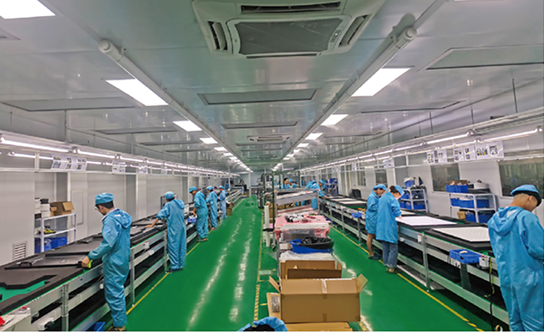
Assembly Bay
Dust-free assembly and cleanroom optical bonding environment.
Quality Control & Testing
72-hour thermal burn-in aging and 40-point capacitive calibration.
Engineered Touch Display Solutions For Global Procurement
Send your project specs, venue layout, required screen sizes, and volume target directly to our engineering team. We deliver custom 3D CAD drawings, technical specification sheets, and factory-direct pricing within 24 hours.