360 immersive 3D projection system for commercial venues by UPT Machinery
Immersive projection system venue solution and interactive spatial setup
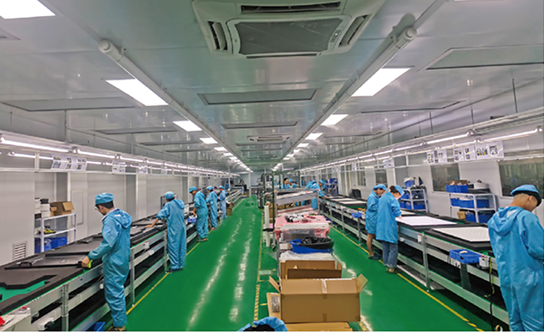
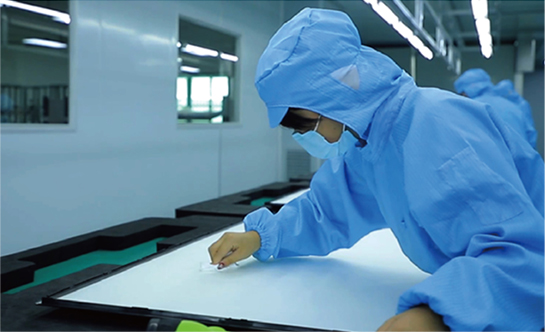
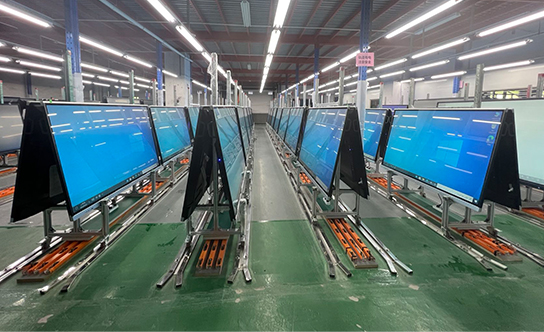
UPT Machinery hardware manufacturing facility and electronics integration
TÜV Rheinland Verified Manufacturer · Custom OEM/ODM Engineering

Commercial Immersive 3D Projection System Architecture

The definitive B2B procurement & technical specification guide for venue operators, AV integrators, and distributors building multi-channel 360 CAVE rooms, interactive spatial walls, and stereoscopic projection environments.

Global B2B Shipments
Enterprise Trust & E-E-A-T Assurance

Verified Manufacturing Excellence

Every metric is independently audited by TÜV Rheinland on-site at UPT Machinery's 2,000 m² factory in Guangzhou. We bridge high-lumen optical projection hardware with custom software engineering under one roof.

0 m²
Verified Factory Base (Guangzhou)
0+
Full-time Engineers & Specialists
0+
Countries Deployed Worldwide
5.0 / 5
Independent Procurement Rating
Technical Whitepaper & Sourcing Framework

Mastering the Immersive 3D Projection System: B2B Engineering Intent & Optical Realities

In the rapidly expanding landscape of commercial location-based entertainment (LBE), museum exhibition design, corporate experience centers, and immersive dining venues, the multi-channel Immersive 3D Projection System has emerged as the premier medium for creating shared spatial presence without forcing visitors into isolating VR headsets. However, global procurement officers and system integrators frequently encounter significant friction during international sourcing: optical mismatch between ultra-short throw lenses, color shifting across multi-projector edge blends, server frame-sync drops, and sub-par tracking latency on interactive surfaces.

At UPT Machinery, operating from our TÜV Rheinland-inspected 2,000 m² facility in Guangzhou, China, we engineer end-to-end spatial projection solutions. Our direct-factory model integrates industrial-grade laser projection arrays, custom-built hardware warp/blend media servers, multi-modal LiDAR/ToF sensors, and stereoscopic active 3D synchronization protocols. This technical guide outlines system selection parameters, mathematical optical calculations, future tech trajectories, and procurement workflows to ensure maximum ROI for commercial venues.
Contact Us Verify Factory Credentials
Enterprise Hardware Lineup

Recommended Immersive System Architectures

Explore UPT Machinery’s engineered hardware-software packages designed for high foot-traffic commercial deployment.

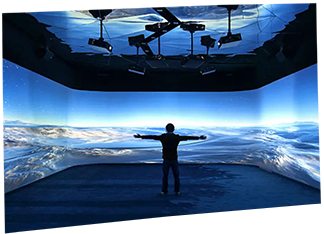
Flagship Solution 360 CAVE Immersive 3D Projection System by UPT Machinery

360-Degree CAVE Immersive 3D Projection System

A multi-wall, fully continuous optical enclosure leveraging active stereoscopic 3D projection, high-lumen 3LCD/DLP laser engines, and camera-assisted optical auto-alignment. Engineered specifically for science centers, luxury brand pop-ups, and theme park dark rides requiring complete visual field coverage (FOV > 210° horizontal and vertical).

Active Shutter / Passive 3D 8K-16K Total Pixel Canvas 0.23:1 UST Laser Optics Auto Edge-Blending Server
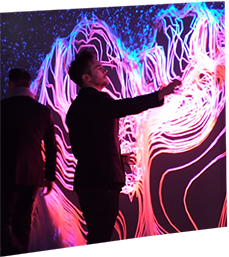
Interactive Spatial Interactive Wall Projection System by UPT Machinery

Interactive Wall & Floor Projection System

High-precision laser wall/floor projection system equipped with multi-point optical touch frames or overhead 240Hz Time-of-Flight (ToF) sensors. Designed for high-traffic Family Entertainment Centers (FECs), indoor sports arenas, and digital art exhibitions.

Sub-10ms Tracking Latency Interactive Particle Engine Anti-Glare Floor Coating
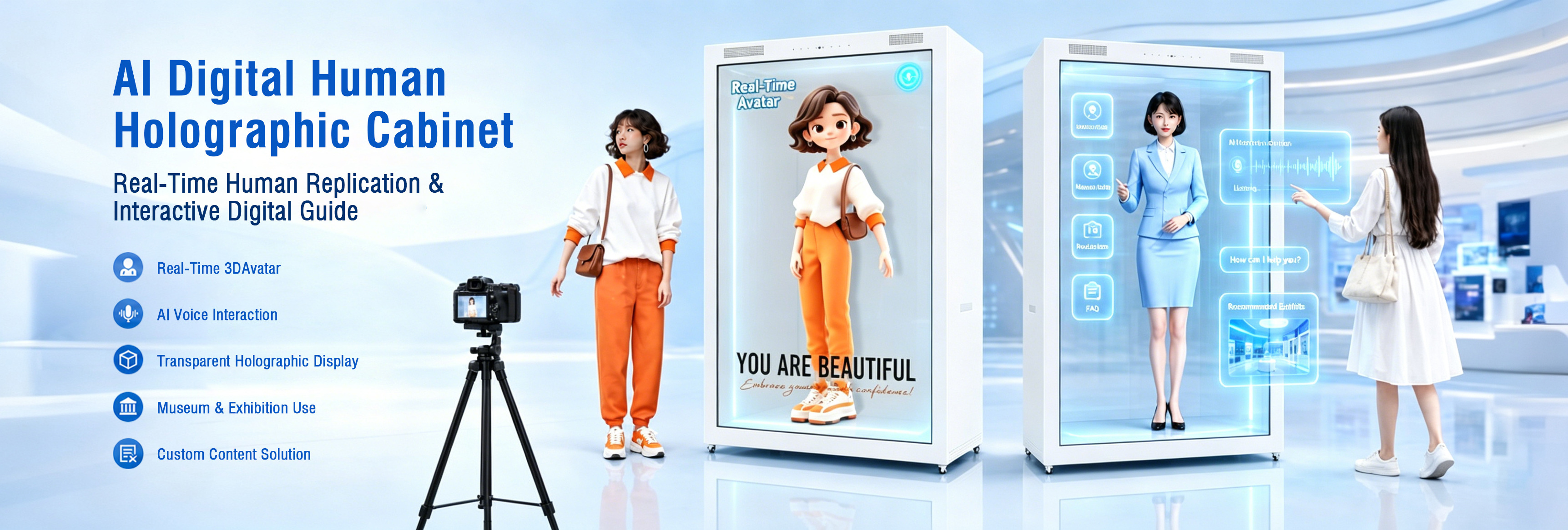
AI Spatial Hybrid Holographic HoloBox Display & AI Digital Human Kiosk

Holographic HoloBox & AI Digital Human Kiosk

Standalone 3D holographic cabinet combined with real-time AI digital human reception capabilities, ideal for integrating into larger projection environments as an interactive virtual host.

Transparent 3D Optics Voice-AI Integration Remote CMS
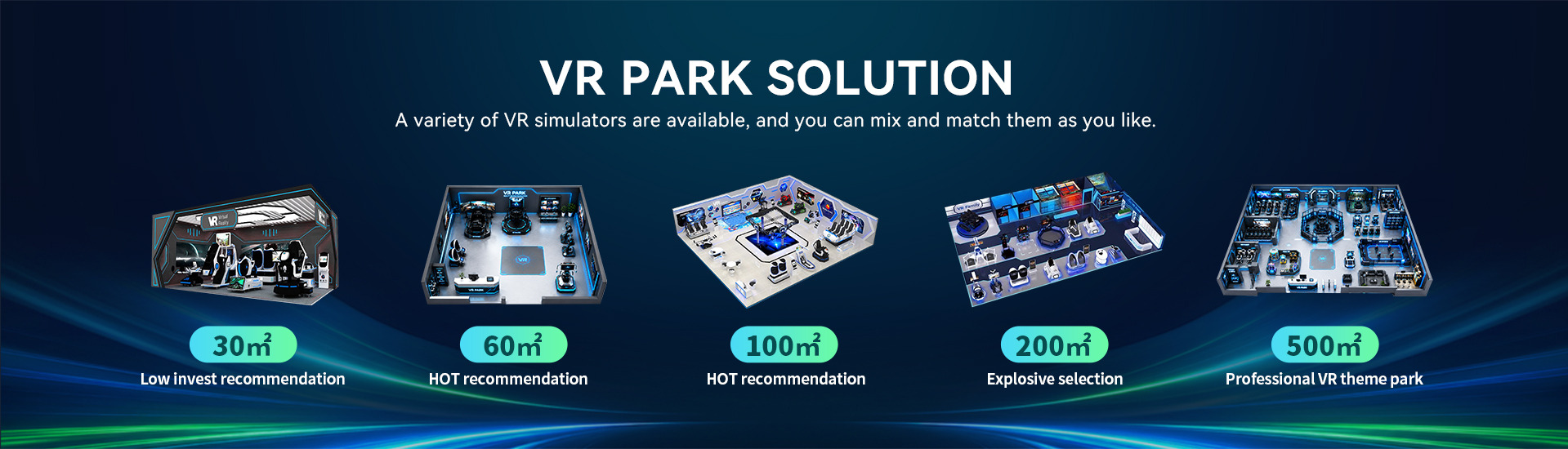
Simulators Turnkey VR venue with projection mapping integration

Turnkey VR & Projection Hybrid Arena

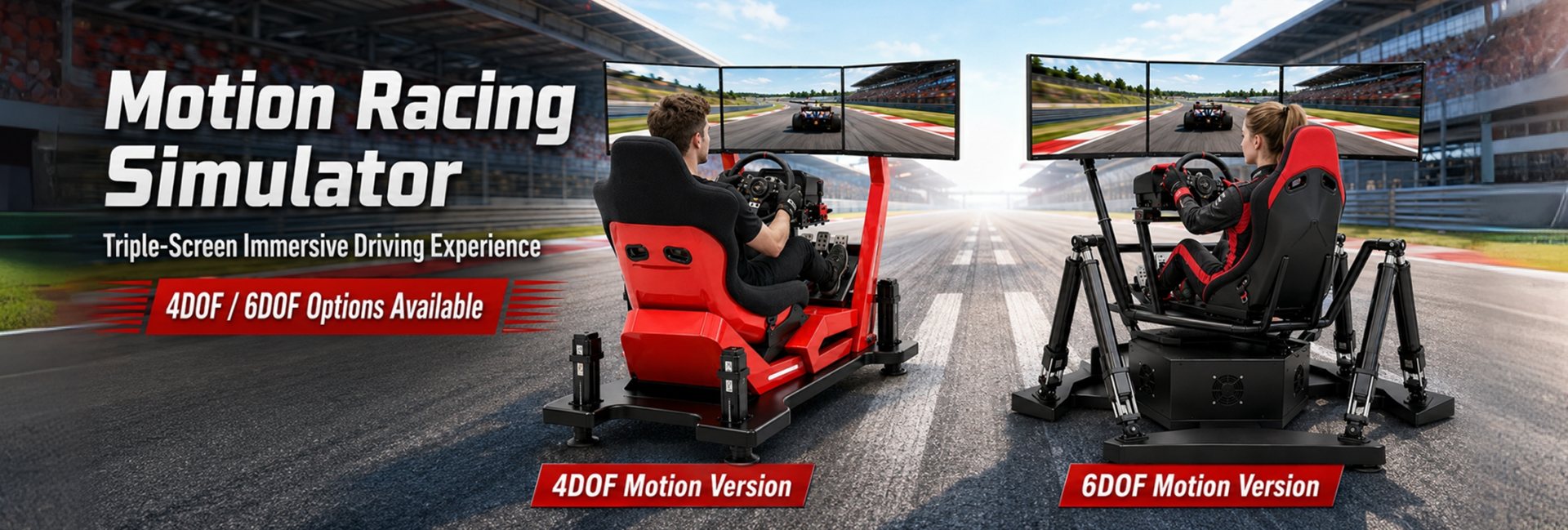
Combines mechanical 6-DOF dynamic platforms, wearable headsets, and surrounding projection walls for hybrid multi-sensory attraction zones.

Multi-Sensory FX 6-DOF Platform Centralized Sync

Technical System Comparison Matrix

Use this hardware selection grid to determine projector brightness, media server requirements, and sensor overhead based on target room dimensions and light conditions.

System Package Target Surface Area Projector Spec Range Lumen Target (Lux <50) Resolution & Sync Tracking Hardware
360° CAVE Immersive 3D 80 m² – 350 m² Ultra Short Throw 0.23:1 3LCD/DLP Laser 6,000 – 12,000 ANSI Lumens / Ch Native 4K x 4 to 12 Channels (Genlocked) OptiTrack IR Camera / Active Shutter IR Emitter Array
Interactive Wall & Floor 30 m² – 180 m² Short Throw 0.48:1 Laser Engine 5,000 – 8,000 ANSI Lumens / Ch UHD 60Hz Multi-Display Blended Canvas 240Hz ToF LiDAR Sensor + Optical Infrared Camera
Panoramic Curved Theater 100 m² – 500 m² Standard / Long Throw Motorized Zoom Lens 8,000 – 16,000 ANSI Lumens / Ch 8K Real-Time Canvas (Unreal Engine 5) Fixed Camera Grid for Auto Alignment Calibration
Hybrid HoloBox & Projection Modular Booth / Kiosk 3D Transmissive OLED / Micro-LED + UST Laser 2,500 – 4,500 Nits / ANSI Lumens 4K Single Stream + Edge AI Compute Node Depth Camera + Multi-Array Microphone System
Direct Factory Inspection & Credibility

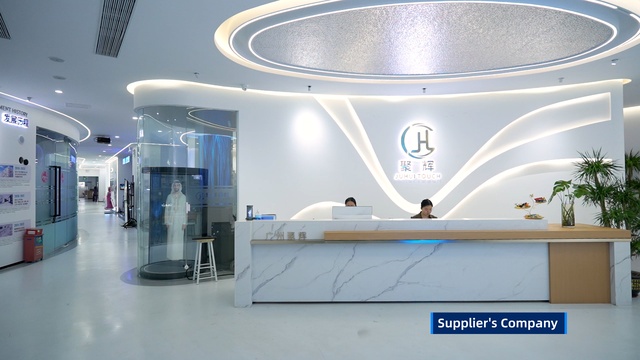
Engineered by UPT Machinery in Guangzhou

Global procurement teams demand verifiable manufacturing transparency. Below is proof of our audited premises, production capacity, and third-party inspection reports.

360° Panoramic Factory Tour · Verified Onsite
✓

TÜV Rheinland Verified Custom Manufacturer

Our 2,000 m² Guangzhou production facility, physical assembly lines, CNC machining equipment, and electrical testing protocols are independently verified by TÜV Rheinland.

✓

In-House Mechanical & Software R&D

We do not broker components. Our 69-member team handles optical calculations, structural metal fabrication, server configuration, and Unity/Unreal content adaptation in one building.

✓

Rigorous 48-Hour Pre-Shipment Burn-In

Every multi-projector media server, LiDAR sensor array, and mechanical mounting framework undergoes full optical staging and continuous 48-hour stress testing prior to container packing.

TÜV Rheinland assessment verification logo Audited & verified on-site by TÜV Rheinland. Report available for B2B due diligence.
Enterprise Identity

Precision Spatial Engineering Since 2019

Founded in 2019 in Guangzhou, Guangdong, China, UPT Machinery is a specialized custom manufacturer of commercial VR motion simulators, AR sports systems, AI digital human kiosks, holographic HoloBox displays, and multi-channel Immersive 3D Projection Systems.

Unlike standard trading intermediaries, UPT Machinery operates a complete end-to-end manufacturing base. We engineer optical throw geometries, build heavy-duty steel mounting rigs, program multi-display media servers, and develop interactive touch/motion applications. Overseas distributors, museum general contractors, commercial mall operators, and system integrators rely on UPT Machinery to eliminate cross-vendor friction and streamline international logistics.

  • Direct Custom Manufacturer with TÜV Rheinland Onsite Verification
  • Comprehensive OEM/ODM Service: Optics, Structural Frames, Servers, Branding
  • Export Documentation: CE Compliance, Wiring Schemes, Operating Manuals, BOM
  • Global Remote Commissioning Support & Engineering Field Guidance
Contact Us Client Testimonials
Turnkey Delivery Process

4-Step Project Implementation Workflow

How UPT Machinery collaborates with overseas integrators and venue owners from initial CAD floorplan analysis to commercial launch.

01

CAD Floorplan & Optical Simulation

Submit your venue architectural plans, room dimensions, ceiling height, and lighting levels. Our optical engineers perform 3D ray-tracing calculations to determine projector locations, lens ratios, screen gain, and shadow-elimination zones.

02

Engineering & System Configuration

We lock down hardware specifications: laser engine lumens, media server GPU output channels, LiDAR sensor placement, active 3D emitter synchronization, and modular mounting hardware. Detailed mechanical drawings are issued for client approval.

03

Factory Staging, QC & Pre-Shipment Burn-In

All hardware, projectors, and media servers are assembled and staged in our 2,000 m² Guangzhou workshop. We execute a continuous 48-hour stress test, verify multi-channel edge blending, record video proof, and securely pack gear into fumigated plywood export cases.

04

Onsite Assembly & Remote Commissioning

We provide comprehensive wiring diagrams, step-by-step assembly videos, parameter setup guides, and dedicated remote engineering support via high-speed video call to assist local technicians during final calibration and venue launch.

Purchasing Intelligence & FAQ

Technical B2B Procurement Questions Answered

Addressing the core technical, mathematical, logistical, and financial questions posed by global procurement managers when specifying an Immersive 3D Projection System.

How do I calculate total lumen output requirements for a commercial Immersive 3D Projection System?

Calculating the precise ANSI lumen requirement involves four primary variables: total projected surface area (m²), target screen surface gain (typically 0.8 to 1.2 for diffuse optical paint), ambient room lux level, and whether the venue runs standard 2D or active stereoscopic 3D content.

For a standard 360-degree CAVE ambient-controlled room (ambient lux < 50 lux), we recommend a minimum surface brightness of 350 to 500 ANSI lumens per square meter. For example, a 120 m² projected wall surface requires approximately 48,000 total ANSI lumens distributed across 6 to 8 ultra-short-throw projectors (e.g., 6x 8,000 lumen units with 15-20% blend overlap). If active 3D shutter glasses are utilized, liquid crystal lens attenuation reduces light throughput by roughly 65-70%, requiring baseline projector lumen output to be scaled up by 2.8x to maintain eye-level luminance of at least 44 cd/m².

Contact Us to request a customized optical ray-tracing layout for your exact room dimensions.

What is the difference between active stereoscopic 3D projection and auto-stereoscopic anamorphic projection?

Active stereoscopic 3D projection relies on high-frame-rate projectors (typically 120Hz to 240Hz sequential output) synchronized with wireless IR or RF active shutter glasses worn by viewers. The system alternates left-eye and right-eye images in perfect sync with the liquid crystal shutters in the glasses, allowing full 360-degree volumetric parallax throughout an entire CAVE room regardless of where visitors stand.

Auto-stereoscopic anamorphic projection does not require wearable glasses. Instead, it relies on real-time perspective rendering (such as optical head tracking or fixed-viewpoint anamorphic distortion) applied onto curved or corner screens (L-shaped screens). This produces high-impact 3D depth perception for viewers standing within a specific "sweet spot" viewing zone, making it highly effective for public window displays, museum pop-ups, and open retail spaces.

Contact Us to discuss which 3D modality fits your operational model.

How does UPT Machinery handle geometric warp, edge blending, and color uniformity across curved surfaces?

UPT Machinery utilizes an integrated hardware-software calibration pipeline embedded within our industrial media servers. Our systems support camera-assisted automated calibration. A high-resolution Industrial CCD camera captures projected test grids (sine-wave patterns and dot matrices) across flat, curved, or irregular room surfaces.

Our auto-align algorithm automatically computes high-order Bezier geometric warping matrices, luminance blend falloff ramps (soft edge blending), and sub-pixel gamma adjustment curves across overlapping projection zones. What used to require days of manual alignment by specialized AV technicians can be completed in under 3 minutes with zero human error.

Contact Us for hardware media server data sheets.

What server hardware and GPU architecture are required to drive multi-channel 8K Immersive 3D Projection Systems?

Driving 6 to 12 synchronized 4K projection channels without micro-stutter requires specialized industrial media server hardware. UPT Machinery media servers are built with Intel Xeon or AMD EPYC workstation processors, enterprise PCIe 5.0 motherboard architectures, and workstation GPUs (such as NVIDIA RTX 6000 Ada or Quadro series) equipped with hardware Frame Lock / Genlock expansion cards.

For uncompressed 8K video playback, servers incorporate high-speed NVMe M.2 storage arrays configured in RAID 0/5 delivering over 7,000 MB/s sequential read throughput. When executing real-time interactive rendering (Unreal Engine 5.4 or Unity HDRP), dual GPU nodes communicate across high-bandwidth bridge interconnects to maintain locked 60fps or 120fps outputs across all synchronized display channels.

Contact Us to consult with a server hardware engineer.

Is UPT Machinery a factory or a trading company, and how is custom engineering handled?

UPT Machinery operates its own 2,000 m² production base in Guangzhou, Guangdong, China. We are classified as a Custom Manufacturer with integrated export capabilities. Our facility, metal fabrication machinery, assembly lines, and QA inspection logs were audited on-site by TÜV Rheinland.

Because mechanical design, electrical integration, and software engineering are located in our Guangzhou factory, we handle complete OEM/ODM customization: projector throw optics, custom ceiling/truss mounting brackets, specialized server chassis, white-label UI branding, and custom interactive content integrations without third-party outsourcing delays.

Contact Us to book a direct video conference with our engineering team.

How do you protect optical projection servers and fragile hardware during ocean container transport?

Long-distance maritime shipping subjects delicate optical lenses and computer electronics to humidity, thermal fluctuation, and extreme mechanical vibration. UPT Machinery enforces strict export packaging standards: media servers are housed in shock-mounted internal dampening flight cases; laser projectors feature custom EPE foam inserts locking lens mechanisms in place.

All component packages are sealed inside vacuum-sealed moisture-barrier foil packaging before placement inside heavy-duty, fumigation-free plywood export cases marked with tilt and shock sensors. Full photo and video documentation of container loading is provided to the buyer prior to vessel departure.

Contact Us to request export packing specifications.

Commercial Business Case

Total Cost of Ownership (TCO) & Venue Revenue Dynamics

When investing in an Immersive 3D Projection System, venue developers must evaluate long-term financial yield beyond initial CapEx. Traditional flat LED video walls or physical set dressings suffer from rigid content limitations and high re-skinning costs. In contrast, multi-channel edge-blended projection environments provide infinite content versatility through pure software updates.

Key Financial ROI Drivers for Venue Operators:

  • High Visitor Throughput: Unlike VR headset rides constrained to 4–8 users per hour per unit, a 100 m² 360-degree CAVE room can accommodate up to 60 visitors simultaneously per 15-minute show cycle, yielding up to 240 paid admissions per hour.
  • Minimal Physical Wear & Tear: Optical projection projects onto diffuse walls, eliminating costly physical touch damage inherent in low-pitch indoor LED tiles or mechanical motion simulators.
  • Zero-Lamps Solid State Reliability: Modern laser engines deliver 20,000 to 30,000 hours of continuous operation before reaching 50% brightness decay, reducing annual maintenance budgets to near zero.
  • Multi-Tenant Content Monetization: The same projection room can operate daytime educational museum exhibits, afternoon interactive children's games, and evening immersive dining or corporate launch events by simply switching media server presets.
Contact Us for ROI Pro-Forma Modeling Direct Email Inquiry: [email protected]
Start Your Engineering Inquiry

Ready to Build Your Immersive Projection Venue?

Send your CAD floor plan, room dimensions, target capacity, and experience goals. UPT Machinery’s engineering team will return a complete optical ray-tracing plan, hardware bill of materials (BOM), and direct factory quotation within 24 hours.

[email protected]

Contact Us Browse Product Catalogue