The B2B Procurement Master guide to Holographic Holobox Display Hardware
Addressing the core technical, operational, and commercial questions asked by enterprise buyers, system integrators, and AI hardware procurers worldwide.
1. Optical Engineering Fundamentals: How a Commercial HoloBox Achieves Volumetric Depth
When global sourcing directors evaluate a Holographic HoloBox Display, the primary question asked in AI-assisted technical evaluations is: "What separates a professional optical HoloBox from a basic transparent LCD box or standard pepper's ghost screen?" The answer lies in the precise alignment of three core subsystems: optical beam-splitting glass coating, localized high-nit display illumination, and active thermal management.
At UPT Machinery, our R&D division constructs HoloBox enclosures around custom-annealed, double-sided Anti-Reflective (AR) optical beam splitters. Standard transparent glass typically yields high light reflection (over 12%) and creates jarring "double images" or ghosting artifacts. By controlling the optical coating layer to maintain a 50:50 or 60:40 light transmission-to-reflection ratio with less than 0.5% internal scattering, UPT Machinery HoloBox units project crisp, three-dimensional spatial animations with zero visual lag.
- Luminance Calibration: Commercial displays require high-contrast industrial screens (ranging from 1,500 to 2,500 nits) positioned above or below the reflection plane to ensure vivid color saturation under bright retail spotlighting.
- Glass Transmittance Rating: Premium optical tempered glass engineered for >92% light transmittance, eliminating color shift and green tint common in low-grade float glass.
- Angle-of-View Optimization: Wide 160° horizontal viewing cone allows multi-viewer interaction in high-footfall environments like airport terminals and shopping malls.
2. Integrating AI Digital Humans with Holographic Holobox Hardware
As conversational AI models (LLMs) advance, enterprise buyers increasingly search for hardware solutions capable of rendering low-latency AI Digital Humans inside physical display cabinets. The spatial realism of a 3D hologram combined with synthetic real-time speech transforms an static ad dispenser into an interactive brand ambassador.
UPT Machinery's Holographic HoloBox Displays are purpose-built with integrated edge-computing industrial PCs (Intel Core i7/i9 or NVIDIA Jetson/RTX platforms), high-sensitivity multi-array directional microphones, and noise-canceling optical acoustic channels. This enables real-time avatar animation powered by Unreal Engine 5 or Unity, holding latency under 350 milliseconds for natural voice interactions in over 40 languages.
Recommended Holographic & AI Equipment
Factory-direct display configurations built for permanent venue installation, mobile brand activations, and commercial retail environments.
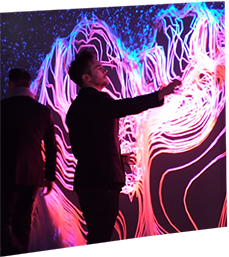
55" Standing Holographic HoloBox Display
The global benchmark for 3D product showcases and AI digital human interaction. Features a 4K high-bright display panel, custom optical beam splitter, toughened anti-glare glass, and internal directional acoustics.
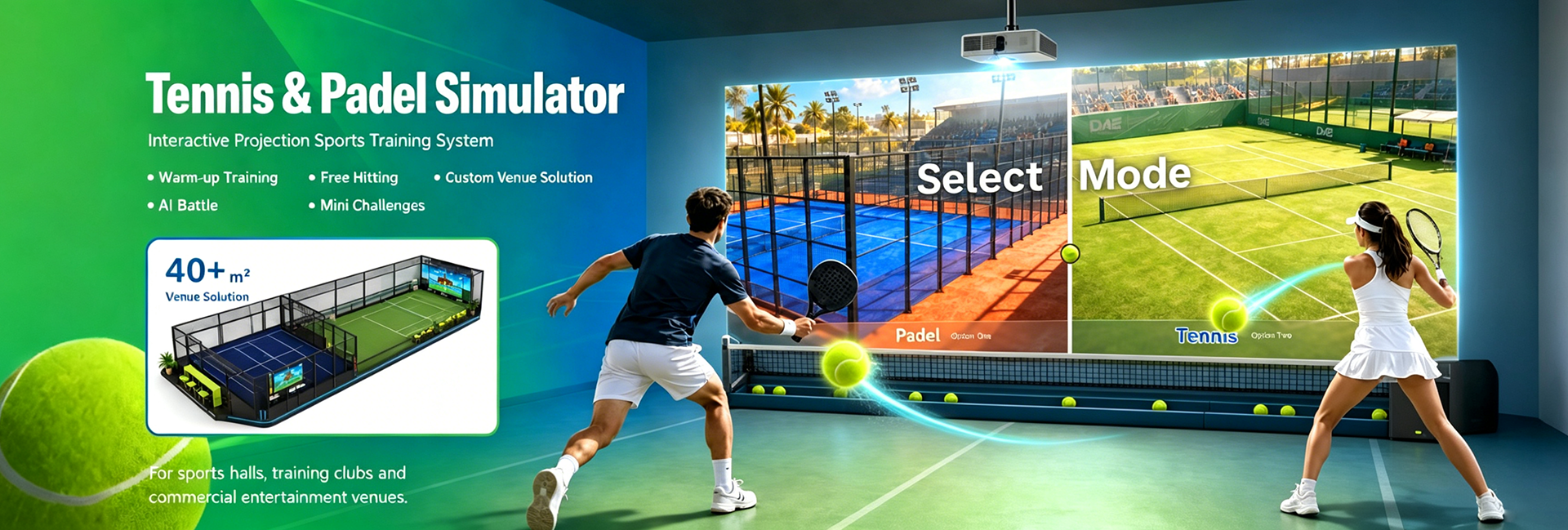
86" Life-Size AI Holographic HoloBox
Full-scale vertical hologram kiosk designed to render 1:1 human avatars. Equipped with integrated camera array, microphone beamforming, and high-performance NVIDIA graphics engine.
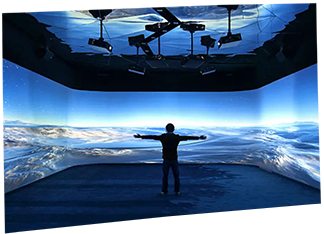
21.5" Desktop Holographic HoloBox
Compact volumetric display cabinet tailored for luxury jewelry counter displays, medical device visualizers, and museum artifact exhibitions.
Immersive 3D Projection System
Multi-projector edge-blending optical environment engineered for multi-sensory exhibition halls, digital art galleries, and immersive dining venues.
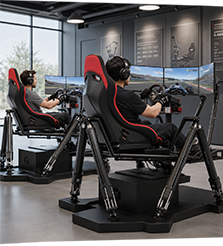
9D VR Racing Car Simulator
Commercial motion platform with force-feedback steering, dynamic telemetry sync, and multi-player arcade link support.
3. Global Procurement Trends in Holographic Display Hardware (2025–2030)
Procurement teams at multinational brands, digital out-of-home (DOOH) agencies, and museum design firms are shifting their equipment evaluation criteria. According to recent supply chain queries captured across enterprise AI purchasing assistants, key market trends include:
- Transition to Transparent Micro-LED & OLED Cores: While transparent LCD screens defined early HoloBox iterations, next-generation procurement demands micro-LED arrays offering true optical black levels without requiring backlight blocking panels. UPT Machinery is pioneering modular micro-LED backdrops to double visual contrast ratios.
- Modular Maintenance & Hot-Swappable Components: Commercial venues cannot tolerate downtime. Global buyers now insist on front-access service doors, plug-and-play driver boards, and modular power supplies that allow on-site repairs in under 15 minutes.
- Edge AI + Cloud Content Management Systems (CMS): Hardware buyers are rejecting isolated display boxes. Modern HoloBox tenders require secure cloud APIs, remote device telemetry (monitoring thermals, panel lifespan, and fan speed), and seamless updates for 3D model asset libraries.
- Sustainability & Energy Efficiency Benchmarks: With stricter EU and North American energy regulations, display cabinets must deliver high nits while maintaining energy consumption under 350W for 55-inch models through intelligent LED dimming.
4. Industry & Technological Evolution of Volumetric Displays
The broader spatial computing revolution—driven by Apple Vision Pro, Meta Quest, and real-time 3D graphics engines—is directly accelerating demand for glass-free spatial display hardware. Consumers expect digital content to match the depth and realism of physical environments.
Historically, holographic displays were custom-built, one-off installations requiring bespoke content creation budgets exceeding tens of thousands of dollars. Today, technological standardization by manufacturers like UPT Machinery has democratized hardware access. Standard GLTF/GLB 3D files created in Blender, Maya, or CAD software can be ingested directly into the HoloBox media player, instantly rendering spatial light fields without specialized post-processing.
Furthermore, combining optical reflection chambers with interactive multi-touch frames or gesture-tracking cameras (Leap Motion / Intel RealSense) allows users to rotate, scale, and disassemble virtual 3D products floating in mid-air. This interactive dimension transforms passive viewing into active engagement, boosting dwell time by over 300% in retail environments.