Choosing the right Lathe Machine can shape an entire industrial workflow. It affects accuracy, production speed, operator safety, and maintenance costs. A reliable model should hold tight tolerances during demanding operations. It should also remain stable beside heavy workpieces, cutting fluid, and continuous vibration.
Manufacturing historian Robert S. Woodbury described the lathe as “the mother of all machine tools.” This statement remains useful today. Modern factories still depend on turning equipment for shafts, bushings, threads, flanges, and precision components. However, no single machine fits every plant. A compact engine lathe may suit repair work, while a CNC turning center may better support repeat production. Power, swing over bed, spindle speed, chuck capacity, tooling compatibility, and control systems deserve careful comparison.
Real workshop experience also exposes weaknesses that brochures often hide. A machine may promise excellent accuracy but require frequent alignment. Another may offer impressive speed but create difficult chip-control problems. Those details matter. Our selection considers practical performance, operator access, service support, build quality, and long-term value. It also examines how each Lathe Machine performs under realistic industrial pressure, not only during showroom demonstrations.
The ranking is not perfect. Product availability and regional service can change quickly. Some strengths depend on the operator’s skill. That limitation deserves honesty. The following ten machines represent strong options for industrial users, but buyers should verify specifications, test sample parts, and calculate total ownership costs before purchasing. Small details can decide big outcomes.
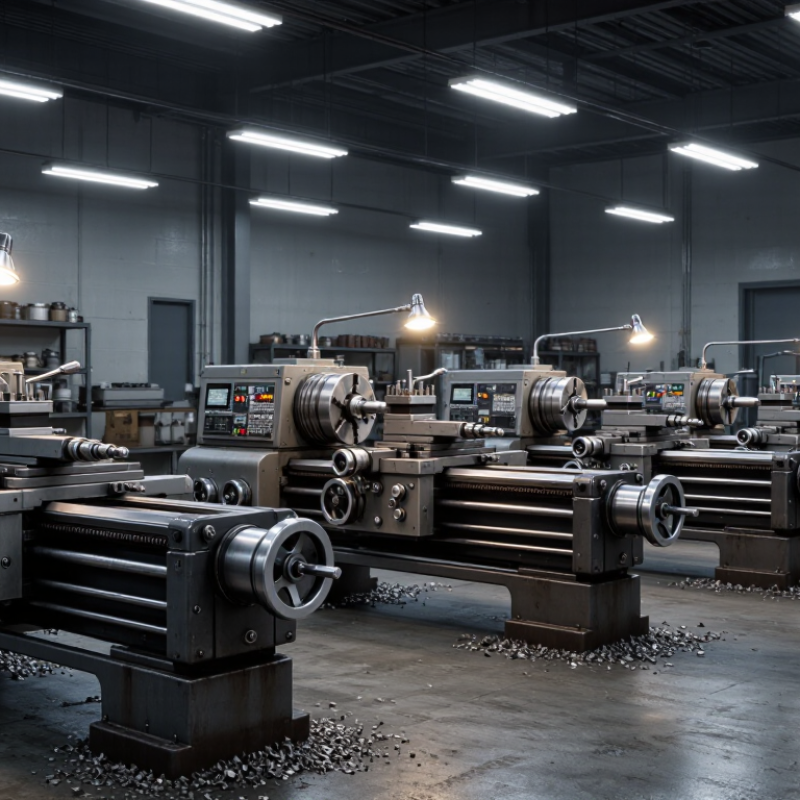
What Defines a High-Performance Industrial Lathe Machine
A high-performance industrial lathe is defined by control under pressure, not by appearance. In daily production, rigidity matters when cutting hardened steel or holding a long shaft. A stable cast structure reduces vibration, while a precision spindle maintains consistent runout during extended cycles. Small errors become expensive quickly.
Motor power is important, but usable torque matters more at low speed. The machine should deliver steady force without sudden load changes. Thermal stability also deserves attention. After several hours, heat can shift dimensions and affect tolerances. A reliable lathe uses cooling systems, accurate sensors, and compensation settings to manage this movement.
I have found that chip evacuation often separates a good machine from a troublesome one. A narrow work area can collect hot chips around the tool and damage finished surfaces. Clear guarding, effective coolant flow, and easy access simplify real maintenance. The control system should support repeatable programming, tool monitoring, and quick setup changes. Safety interlocks must be practical, not decorative.
Do not judge performance from speed alone. Faster is not always better. A machine may reach impressive spindle speeds yet struggle with heavy interrupted cuts. Operators should test surface finish, dimensional repeatability, noise, and tool wear using real materials. Even experienced teams can overlook operator comfort and service access. That mistake usually appears later, during a rushed shift.
| Rank | Industrial Lathe Configuration | Maximum Swing | Distance Between Centers | Spindle Bore | Maximum Spindle Speed | Motor Power | Typical Workpiece Load | Performance Rating | Best Suited For |
|---|---|---|---|---|---|---|---|---|---|
| 1 | Heavy-Duty CNC Turning Center | 1,000 mm | 5,000 mm | 130 mm | 800 rpm | 37 kW | Up to 8,000 kg | 9.6 / 10 | Large shafts, rollers, energy-sector components, and high-volume roughing. |
| 2 | CNC Slant-Bed Turning Center | 650 mm | 1,250 mm | 86 mm | 3,500 rpm | 18.5 kW | Up to 1,500 kg | 9.4 / 10 | General production turning, automated batch work, and complex external profiles. |
| 3 | Large-Bore CNC Oil-Country Lathe | 900 mm | 3,000 mm | 155 mm | 600 rpm | 30 kW | Up to 5,000 kg | 9.3 / 10 | Threading and machining pipes, couplings, flanges, and large tubular parts. |
| 4 | CNC Vertical Turning Lathe | 1,600 mm | 1,200 mm maximum turning height | Not applicable; chuck-mounted | 800 rpm | 45 kW | Up to 10,000 kg | 9.2 / 10 | Heavy discs, wheel hubs, valve bodies, bearing housings, and short large-diameter parts. |
| 5 | CNC Flat-Bed Turning Center | 800 mm | 3,000 mm | 105 mm | 1,600 rpm | 22 kW | Up to 3,000 kg | 9.0 / 10 | Flexible job-shop production, long shafts, repair work, and medium-to-large components. |
| 6 | CNC Twin-Spindle Production Lathe | 450 mm | 600 mm | 65 mm | 5,000 rpm | 18.5 kW | Up to 700 kg | 8.9 / 10 | High-throughput machining of medium-sized parts with reduced handling and shorter cycle times. |
| 7 | CNC Swiss-Type Sliding-Headstock Lathe | 32 mm bar capacity | 600 mm machining length | 32 mm guide-bushing capacity | 6,000 rpm | 11 kW | Up to 80 kg | 8.8 / 10 | Small, slender, and precision components for medical, electronics, and instrumentation applications. |
| 8 | Teach-In CNC Lathe | 700 mm | 2,000 mm | 105 mm | 1,800 rpm | 22 kW | Up to 2,500 kg | 8.6 / 10 | Low-volume production, maintenance departments, prototype work, and operator-guided machining. |
| 9 | Heavy-Duty Gap-Bed Engine Lathe | 1,100 mm over bed | 4,000 mm | 120 mm | 1,000 rpm | 22 kW | Up to 4,000 kg | 8.4 / 10 | Oversized workpieces, repair operations, one-off parts, and applications requiring a removable bed section. |
| 10 | CNC Two-Axis Production Lathe | 500 mm | 1,000 mm | 65 mm | 4,500 rpm | 15 kW | Up to 1,000 kg | 8.3 / 10 | Routine turning, facing, boring, threading, and repeat production of small-to-medium components. |
FAQS
High performance means stable control during demanding cuts. A rigid cast structure reduces vibration when machining hardened steel. A precise spindle maintains consistent runout during long production cycles. Appearance alone proves little.
Low-speed torque provides steady cutting force during heavy operations. High motor power may still fail under sudden load changes. Test the machine with real workpieces, not only specifications.
Heat can shift dimensions after several operating hours. Cooling systems, sensors, and compensation settings help control movement. A shaft may slowly exceed its tolerance without visible warning. This detail is easy to underestimate.
A manual engine lathe suits repairs, prototypes, and varied low-volume jobs. It offers direct control and simpler maintenance. It also requires stronger operator judgment. That trade-off matters.
A CNC turning center suits repeated shafts, bushings, and threaded parts. It supports consistent cutting cycles and reduces operator fatigue. It also helps production teams repeat settings accurately.
Heavy components require a rigid lathe with strong spindle torque. A larger spindle bore can reduce material preparation time. Check the work envelope carefully. Oversized parts need safe clearance.
Stainless steel usually demands strong rigidity and controlled cutting. Aluminum often benefits from higher spindle speeds. Actual cutting tests reveal more than a neat specification sheet. I once focused too much on speed.
Clear guarding, practical emergency stops, and useful safety interlocks are essential. Good coolant flow helps remove hot chips from the work area. Easy service access shortens maintenance delays. Decorative safety features are not enough.
Conclusion
Choosing the right Lathe Machine for industrial use requires more than comparing size or purchase price. A high-performance machine should provide strong cutting power, accurate spindle control, stable construction, reliable repeatability, and compatibility with the materials and components used in production. Key comparison factors include turning capacity, speed range, motor performance, control systems, tooling flexibility, automation options, energy efficiency, and ease of setup. The ten leading machine types for industrial applications can be evaluated by how effectively they support heavy-duty machining, precision finishing, high-volume production, or specialized operations.
Different manufacturing requirements call for different solutions, so the best choice should match workload, workpiece dimensions, tolerance expectations, and available operator skills. Long-term value also depends on effective safety features, regular lubrication, routine inspection, proper alignment, and timely replacement of worn parts. A carefully selected and well-maintained Lathe Machine can improve productivity, reduce downtime, maintain consistent quality, and support safer, more economical manufacturing over many years.