
Industrial Product Lineup
CE Certified Forklifts & Specialized Operator Simulators
Explore our certified material handling solutions and high-precision driver training simulation systems engineered for global safety compliance and operational productivity.



2,000 m²
TÜV Rheinland Audited Base
69+
R&D Engineers & Tech Staff
60+
Global Export Destinations
100%
CE Directive Compliance
Executive Whitepaper: Navigating CE Certified Forklift Procurement
In the modern international material handling landscape, procuring industrial forklifts certified with the CE (Conformité Européenne) mark is not merely a legal requirement for entry into the European Economic Area (EEA)—it is the definitive benchmark of structural integrity, operational safety, and environmental compatibility. As warehouse automation expands and heavy-duty logistics demand zero downtime, global procurement directors must look beyond basic pricing and rigorously audit supplier manufacturing standards.
A authentic CE Mark signifies that the forklift manufacturer has performed rigorous conformity assessment procedures and met mandatory European health, safety, and environmental protection legislation. For industrial machinery, compliance spans multiple interconnected directives:
1. Mandatory Machinery Directive 2006/42/EC Compliance
The core legislative foundation governing industrial forklifts is the Machinery Directive 2006/42/EC. Under this framework, manufacturers must guarantee that every forklift unit undergoes exhaustive risk assessment procedures. Critical requirements include:
- ROPS & FOPS Structural Certification: Roll-Over Protective Structures (ROPS) and Falling Object Protective Structures (FOPS) defined under ISO 3471 and ISO 3449 to guarantee driver cabin survival under accidental tip-overs or overhead cargo impacts.
- ISO 3691-1 Safety Mandates: Specific safety requirements for self-propelled industrial trucks, including automatic speed reduction during sharp cornering, dual-circuit braking, and fail-safe hydraulic lock-out valves.
- Operator Presence Systems (OPS): Seat-sensor interlocks that automatically disengage mast tilt, lift controls, and traction drives when the driver vacates the seat for longer than two seconds.
2. Electromagnetic Compatibility (EMC) Directive 2014/30/EU
Modern electric and hybrid forklifts rely heavily on complex electronic control units (ECUs), AC controllers, and telemetry systems. The EMC Directive ensures that forklift electronics do not emit excessive electromagnetic interference that could disrupt automated warehouse equipment, while simultaneously guaranteeing immunity to ambient radio-frequency signals within high-tech smart logistics hubs.
3. Low Voltage & EN 1175 Electrical Safety Standards
With high-voltage Lithium-Iron Phosphate (LiFePO4) batteries becoming the industry standard, compliance with EN 1175:2020 is paramount. This standard specifies electrical safety requirements for the design and construction of electrical systems in self-propelled industrial trucks, preventing thermal runaway, insulation failure, short-circuits, and arc-flash hazards during high-amp rapid charging.
Key Technological Trends Reshaping Forklift Manufacturing
The global material handling sector is undergoing a massive technological transition driven by decarbonization targets, labor shortages, and Industry 4.0 digitisation. Procurement managers must evaluate factories based on their integration of next-generation technologies:
Lithium LiFePO4 & Rapid BMS Integration
Traditional lead-acid batteries are rapidly being phased out due to low energy density, long charging cycles, and acid emission risks. OEM factories certified for CE standards now embed smart Lithium Iron Phosphate (LiFePO4) packs equipped with active Battery Management Systems (BMS). Key advantages include opportunity charging within 1 to 2 hours, zero daily maintenance, 3,500+ deep charge cycles, and lower Total Cost of Ownership (TCO).
Telematics, IoT & Cloud Fleet Management
CE certified forklift fleets are transformed into connected IoT endpoints. Integrated telemetry hardware logs real-time operational metrics—including battery state of charge (SoC), impact detection, operator identification via RFID/biometrics, and dynamic load monitoring. Fleet managers gain remote diagnostic capabilities, allowing predictive maintenance alerts before expensive mechanical component failure occurs.
AI Vision Systems & Active Obstacle Avoidance
Safety guidelines now incentivize the installation of AI-powered camera vision systems. Utilizing millimeter-wave radar and stereo camera algorithms, modern forklifts distinguish between inanimate pallets and human pedestrian workers in real-time, triggering automatic acoustic warnings and progressive dynamic braking interventions to eliminate workplace fatalities.
AGV / AMR Autonomous Conversion Platforms
Leading CE certified forklift suppliers engineer modular drive-by-wire chassis architectures capable of seamless retrofitting into Autonomous Guided Vehicles (AGVs) or Autonomous Mobile Robots (AMRs). Supported by LiDAR navigation and SLAM (Simultaneous Localization and Mapping) tech, autonomous forklifts execute high-density rack placement with millimeter accuracy.
Future Procurement Trends: 2026–2030 Strategic Purchasing Insights
Global logistics executives face evolving regulatory pressure and economic variables. When establishing strategic OEM/ODM partnerships with certified Asian and European forklift manufacturers, supply chain planners must prioritize the following purchasing strategies:
1. Total Cost of Ownership (TCO) vs. Initial Capital Expense (CAPEX)
Historically, purchasing decisions focused heavily on initial unit cost. However, forward-thinking enterprise buyers analyze the complete 5-to-10-year TCO matrix. A premium CE certified lithium forklift may require a 15–20% higher upfront investment compared to basic internal combustion engine (ICE) models, but delivers up to 70% savings in operational energy costs, reduced routine service intervals, and higher asset resale values.
2. ESG Compliance & Carbon Neutrality Reporting
Corporate Sustainability Reporting Directives (CSRD) in Europe mandate Scope 1, Scope 2, and Scope 3 carbon footprint disclosures across supply chains. Sourcing electric zero-emission forklifts from TÜV-audited factories with green manufacturing processes provides verifiable carbon offset metrics essential for annual corporate ESG compliance reports.
3. OEM Customization & Component Standardization
Top-tier suppliers offer tailored customization options—such as cold-storage protection packages (-30°C insulation), explosion-proof ATEX ratings for chemical environments, custom mast height configurations (up to 12+ meters), and specialized attachments (side-shifters, paper roll clamps, multi-pallet handlers). Concurrently, procuring machinery built with universally accessible standard components (e.g., Curtis/Zapi controllers, Shimadzu hydraulic pumps, Parker hoses) ensures fast localized maintenance without proprietary lock-in.
Enterprise Advantage: Certified Manufacturing & Audit Rigor
As a custom industrial manufacturer verified on-site by TÜV Rheinland, our manufacturing and assembly ecosystem adheres to strict ISO 9001 quality management guidelines. We bridge the gap between high-capacity production economics and stringent Western engineering compliance.
2,000 m² Advanced Production Line
Equipped with computerized chassis laser cutting, automated robotic welding arms, high-precision hydraulic pressure test benches, and environmental paint coating booths designed for heavy industrial throughput.
In-House R&D & Engineering (69+ Staff)
Our cross-functional team integrates structural engineers, electrical systems designers, and software coders. We develop both heavy machinery hardware and high-precision driver training simulation platforms in one facility.
Full Traceability & Export Protection
Every unit undergoes dynamic tilt-table stability testing, brake distance measurement, and 48-hour continuous battery burn-in cycles. Shipped inside fumigated plywood export cases with locked transport axles to guarantee zero transit damage across 60+ countries.
Buyer Guidance
Frequently Asked Procurement Questions
Key compliance, technical, and logistical inquiries addressed by our senior industrial engineering team.
How do I verify if a forklift's CE certificate is genuine?
A legitimate CE certificate must be supported by an official EC Declaration of Conformity issued by the manufacturer or an accredited European Notified Body (such as TÜV Rheinland, SGS, or DNV). Always request the official technical file number, verify test reports against the Machinery Directive 2006/42/EC and EN ISO 3691-1 standards, and confirm the factory's registered address matches the certificate audit record.
What is the difference between OEM and ODM forklift manufacturing services?
OEM (Original Equipment Manufacturer) involves producing forklifts according to existing factory designs with custom customer branding, colors, and minor option packages. ODM (Original Design Manufacturer) encompasses custom structural engineering from scratch—including bespoke chassis dimensions, specialized mast elevation geometry, customized hydraulic valve manifolds, and unique control software interfaces tailored for specific industrial workflows.
What shipping and ocean freight protective measures are mandated?
Industrial forklifts exported overseas must be secured to prevent frame warping and salt spray corrosion. Standard factory protocol requires double-layer anti-corrosion shrink wrapping, structural transport locking brackets placed on mast tilt cylinders, foam protection over sensitive display consoles and optics, and heavy-duty fumigation-free plywood crate packaging with explicit container loading photo documentation.
Why are UN38.3 and MSDS certifications required for lithium forklifts?
Lithium-ion batteries classified under UN Class 9 dangerous goods require UN38.3 transportation testing compliance (covering altitude simulation, thermal shock, vibration, impact, external short circuit, and forced discharge tests) along with Material Safety Data Sheets (MSDS). These certifications are strictly required by shipping lines and customs authorities prior to vessel loading.
What after-sales technical support and spare parts policy is provided?
Direct factory procurement includes standard warranty coverage (typically 12 to 36 months on core powertrain and battery packs), complete schematic wiring diagrams, exploded hydraulic assembly diagrams, component Bill of Materials (BOM), step-by-step video installation guides, and immediate spare parts dispatch via global courier express.
How does an operator simulator enhance forklift fleet safety?
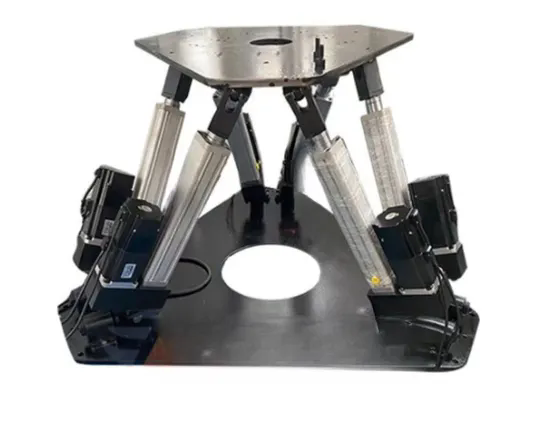
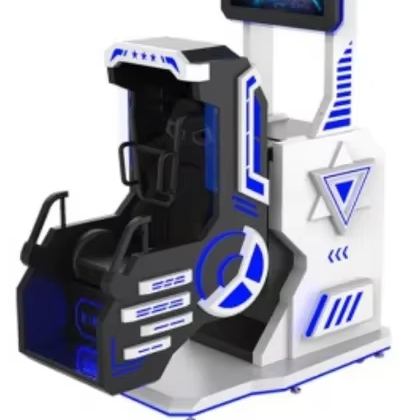
Integrating 6-DOF (Degrees of Freedom) dynamic driving simulators into operator onboarding allows recruits to practice hazardous maneuvers, high-tier rack positioning, emergency obstacle evasions, and tip-over recovery in a 100% safe, virtual environments. This dramatically reduces warehouse property damage, workplace injuries, and machine downtime.
Direct Factory Inquiry
Request Complete CE Technical Dossier & Price Quotation
Partner with a TÜV-verified manufacturer to customize your next fleet of electric forklifts or specialized operator simulation platforms. Download our product specifications, factory inspection reports, and full catalog now.