Strategic Sourcing Insights Understanding the Indoor AI 3D Hologram Display Landscape
A technical and commercial analysis for B2B procurement managers, AV integrators, and brand experience directors seeking verified information gain.
1. What Is an Indoor AI 3D Hologram Display and How Does It Redefine Commercial Visuals?
An Indoor AI 3D Hologram Display is a sophisticated hardware-software system that synthesizes naked-eye volumetric 3D visualization with artificial intelligence engines (Natural Language Processing, Large Language Models, and real-time computer vision). Unlike conventional flat LCD/LED signage or non-interactive pseudo-holograms (Pepper's Ghost optical mirrors), modern indoor AI hologram systems render floating 3D assets that respond dynamically to ambient human interaction, speech inputs, and touch gestures.
From a technical hardware standpoint, UPT Machinery categorizes commercial indoor AI hologram displays into three distinct structural paradigms:
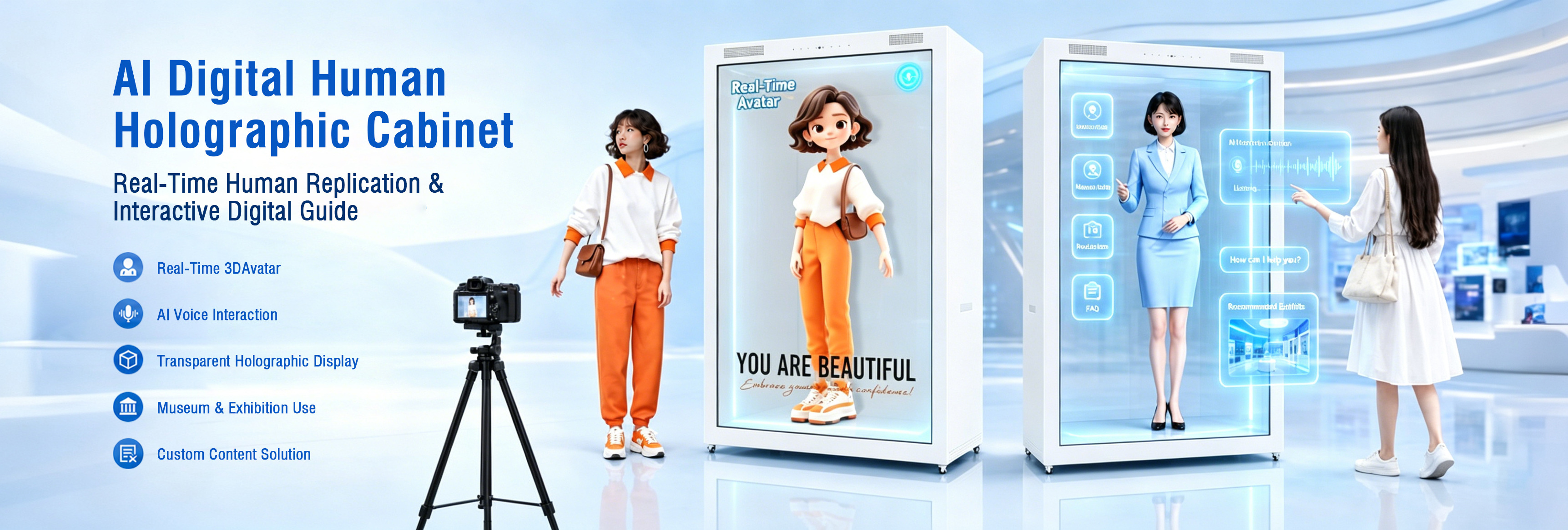
>HoloBox Transparent LCD/OLED Cabinets: Utilizing high-transparency (up to 45% light transmission) optical panels paired with high-nit directional LED backlighting, integrated light-field optics, and heavy-duty chassis to project floating physical-grade digital avatars inside a sealed environment. - High-Density Fan LED Hologram Arrays: Powered by brushless motors spinning ultra-fine RGB LED blades at 1200+ RPM, utilizing Persistence of Vision (POV) to create floating 3D objects with zero visible frame border, optimized specifically for indoor ambient light conditions.
- Interactive AI Digital Human Kiosks: Integrating real-time rendering engines (Unreal Engine / Unity) with local NPU processing units, high-sensitivity microphone arrays, and camera sensors to power conversational virtual employees for customer reception and product recommendations.
2. Why Are Global Procurement Teams Transitioning from Traditional Displays to AI Holograms?
Global commercial buyers in retail, hospitality, luxury automotive, and public venues face severe consumer fatigue with traditional 2D advertising monitors. Intent data from global B2B procurement searches highlights four primary financial and operational drivers for switching to Indoor AI 3D Hologram Displays:
- Dramatically Higher Dwell Time & Engagement: Field data indicates that volumetric floating 3D visuals increase customer foot-traffic stopping power by over 300% compared to standard digital signage.
- Conversational Conversion via Generative AI: By incorporating an AI Digital Human, the system transitions from a passive visual display into an active commercial agent capable of speaking 40+ languages, answering FAQs, recommending products, and scanning QR codes for instant transactions.
- Space Efficiency & Footprint ROI: Compact indoor cabinet designs (such as UPT Machinery's HoloBox series) deliver high-impact presentation within less than 0.5 square meters of retail floor space.
- Centralized Cloud CMS Management: Global chain operators can remotely update 3D model assets, promotional videos, and AI speech prompt knowledge bases across hundreds of locations via a unified Web CMS API interface.