
VR Construction Site Emergency Safety Education Walking Platform
Industrial safety simulation system featuring dynamic dynamic interactive movement tracking, heavy-duty frame construction, and multi-scenario drill modules for industrial training.
Explore our TÜV Rheinland-inspected production lines. Engineered for heavy industrial duty, multi-axis motion synchronization, high-frequency arc stability, and continuous commercial throughput.
Industrial safety simulation system featuring dynamic dynamic interactive movement tracking, heavy-duty frame construction, and multi-scenario drill modules for industrial training.
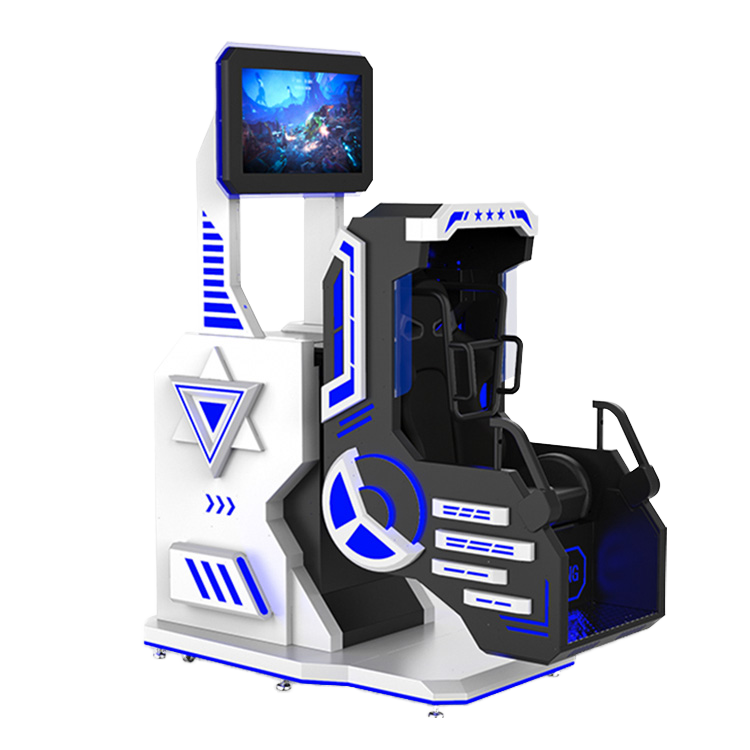
Industrial-grade servo platform with 360-degree continuous rotation, reinforced steel chassis, active safety harness system, and commercial-grade duty cycles.
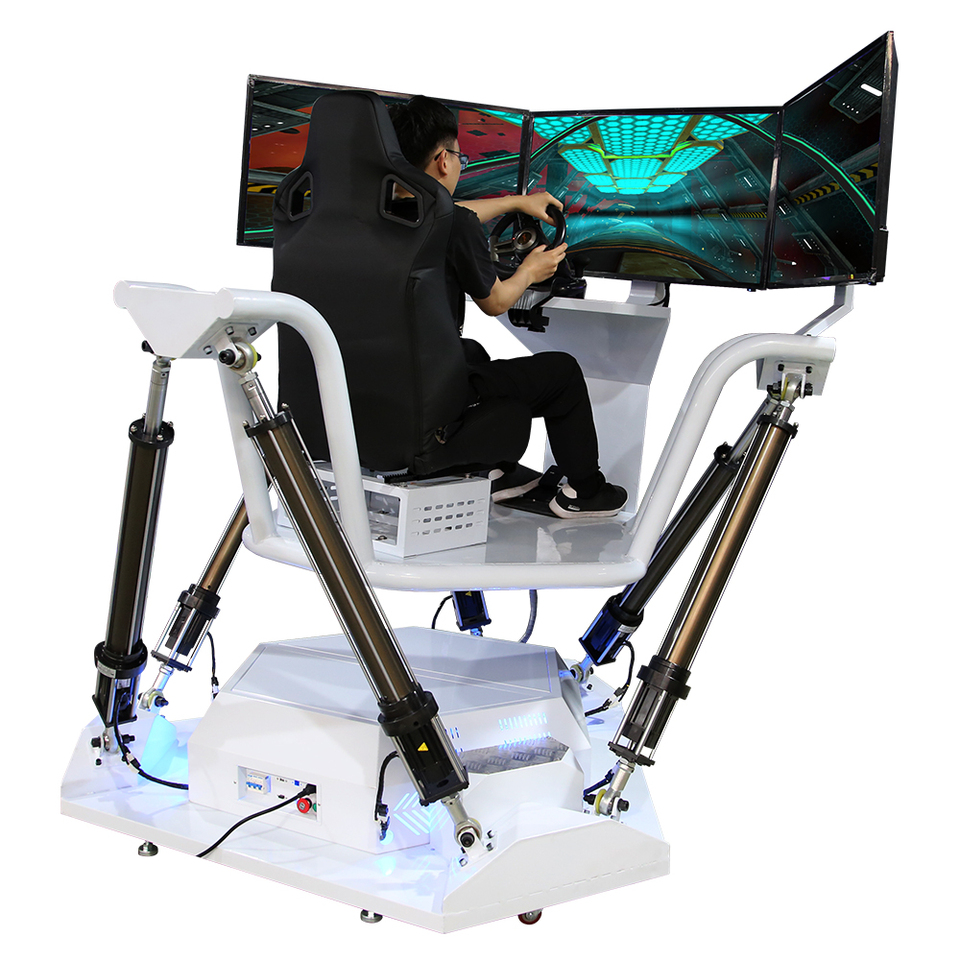
Precision-engineered 6-axis motion platform constructed with laser-cut structural steel, force-feedback controls, and modular electrical cabinets.

Rigid tubular steel chassis engineered for custom branding, adjustable ergonomic seating, powder-coated finish, and high-impact structural stability.

Heavy-duty somatosensory platform built for commercial venue operations, with real-time balance tracking, dual-motor actuators, and robust steel frames.
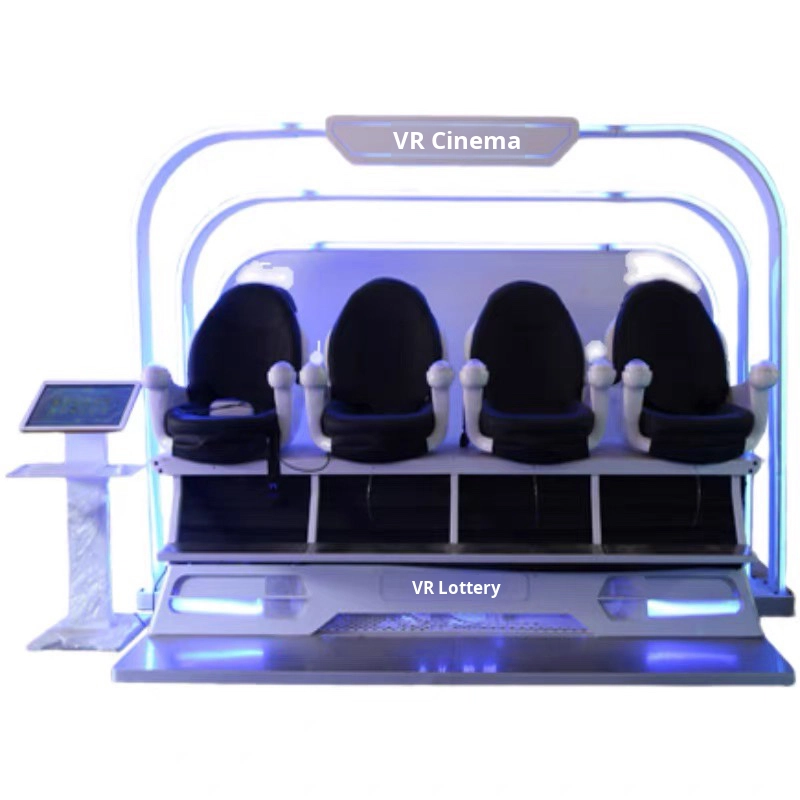
Dual-seat integrated commercial setup with industrial steel enclosures, multi-channel acoustic vibration, and industrial power distribution architecture.

Commercial interactive wall enclosure equipped with optical tracking sensors, heavy-gauge steel framing, and multi-angle projection shielding.

Compact dynamic racing unit featuring fast-response electronic motion stroke, high-durability alloy componentry, and rapid plug-and-play installation.
Operating a verified 2,000 m² state-of-the-art manufacturing facility in Guangzhou, China. We deliver custom mechanical fabrication, CNC plasma cutting power integration, and automated assembly solutions to distributors across 60+ countries.
Our manufacturing premises, electrical assembly safety protocols, and testing facilities undergo rigorous onsite verification by TÜV Rheinland, ensuring complete transparency and ISO-compliant structural integrity.
From custom IGBT inverter circuit layouts and heavy-duty chassis powder coating to CNC controller software localized UI, we provide end-to-end custom tailoring for international machinery brands.
Every industrial power source and automated machine undergoes 100% full-load continuous burn-in testing and thermal dynamics analysis prior to export packaging in fumigation-free plywood crates.
An in-depth engineering breakdown of China's plasma cutting equipment manufacturing ecosystem, inverter topologies, pilot arc ignition systems, duty cycle benchmarks, and factory evaluation methodologies.
Sourcing industrial plasma cutting machinery directly from Chinese wholesale manufacturers requires navigating a complex spectrum of technological specifications. China manufactures over 70% of the world's air plasma cutting power sources—ranging from portable 40A hand-held units to 300A+ High-Definition (HD) CNC gantry systems. The key to securing high-margin, reliable machinery lies in evaluating Inverter Topology (IGBT vs. MOSFET), Duty Cycle Testing Standards (IEC 60974-1 at 40°C), Pilot Arc Starting Mechanisms (HF vs. Blowback/Non-HF), and Torch Cooling Architectures. This guide outlines the exact parameters required to audit Chinese export factories and negotiate OEM/ODM supplier contracts.
The heart of modern commercial plasma cutters manufactured in China is the solid-state inverter circuit. Over the past decade, Chinese factories have largely transitioned from traditional heavy transformer-rectifier units and legacy MOSFET (Metal-Oxide-Semiconductor Field-Effect Transistor) designs to advanced IGBT (Insulated Gate Bipolar Transistor) Modules.
MOSFET vs. IGBT Inverter Comparison: MOSFET technology operates at ultra-high switching frequencies (over 100 kHz) but suffers from high thermal sensitivity and lower current-carrying capacity per chip, making it vulnerable to voltage spikes common in heavy industrial environments. In contrast, modern Chinese wholesale factories utilize dual-module or matrix IGBT topologies operating between 20 kHz and 50 kHz. IGBTs deliver superior thermal dissipation, higher junction temperature tolerance, and much greater current handling, allowing for continuous cutting of thick carbon steel plates (up to 50mm+) without transformer saturation.
| Technical Parameter | Legacy MOSFET Inverter | Standard Commercial IGBT | Industrial High-Def IGBT Module |
|---|---|---|---|
| Switching Frequency Range | 80 kHz - 120 kHz | 20 kHz - 45 kHz | 30 kHz - 60 kHz (PWM Vector Controlled) |
| Thermal Junction Limit (Tj) | Max 125°C | 150°C - 175°C | 175°C+ with liquid nitrogen cooling channels |
| Current Ripple Ratio | < 8% | < 3.5% | < 0.8% (Ultra-smooth plasma arc) |
| Energy Efficiency Rating | 78% - 82% | 85% - 89% | 91% - 94% (Active PFC integrated) |
| Target Thickness (Mild Steel) | 1mm - 12mm | 1mm - 32mm | 0.5mm - 65mm+ (FineFocus Cutting) |
When evaluating wholesale plasma cutters from China, procurement engineers must match the arc starting technology with the intended end-user environment—specifically distinguishing between manual fabrication shop work and automated CNC table integration.
HF ignition utilizes a spark-gap oscillator or high-voltage circuit to generate a 3,000V - 10,000V pulse at high frequency to ionize the air gap between the electrode and nozzle. While HF starting guarantees instant arc transfer on dirty, painted, or rusted metal surfaces, it emits significant Electromagnetic Interference (EMI) and Radio-Frequency Interference (RFI).
Sourcing Consideration: HF units require heavy EMI shielding if paired with CNC controllers to prevent digital signal corruption or stepper motor skipping.
Modern CNC-ready plasma power sources from premier Chinese factories employ pneumatic "blowback" starting. In this system, the electrode is spring-loaded against the nozzle. When compressed air is applied, the gas pressure forces the electrode backward, drawing a pilot arc without high-voltage high-frequency sparks.
Sourcing Consideration: Non-HF arc starting is zero-EMI compliant, making it essential for CNC plasma cutting tables, robotic arm integration, and sensitive industrial automation setups.
A major point of variance in China wholesale plasma cutter pricing lies in how factories rate their Duty Cycle. Duty cycle defines the percentage of a 10-minute period that a machine can operate at its maximum output current before thermal overload protection cuts the circuit.
Low-tier OEM suppliers often quote a 60% duty cycle calculated at an ambient temperature of 25°C. However, top-tier export factories adhere strictly to the IEC 60974-1 international standard, which requires testing at a rigorous ambient temperature of 40°C (104°F). A plasma cutter rated at 100A / 60% duty cycle at 25°C may only deliver 65A at 60% duty cycle when subjected to real-world hot shop conditions of 40°C. Sourcing directors should explicitly mandate 40°C IEC testing documentation during vendor factory audits.
| Power Class (Amperage) | Input Power (Voltage/Phase) | Recommended Air Pressure | Quality Cut Thickness (Steel) | Severance Cut Thickness | Target Application |
|---|---|---|---|---|---|
| 40A Portable Inverter | 110V / 220V Single Phase | 4.5 - 5.5 Bar (65 - 80 PSI) | 8 mm - 12 mm | 16 mm | Light sheet metal, HVAC, auto repair |
| 60A Commercial Cut | 220V / 380V Dual/3-Phase | 5.0 - 6.0 Bar (75 - 90 PSI) | 16 mm - 20 mm | 25 mm | General metal fabrication, maintenance |
| 100A Heavy Industrial | 380V / 415V / 480V 3-Phase | 6.0 - 7.0 Bar (90 - 100 PSI) | 28 mm - 32 mm | 40 mm | Structural steel, shipbuilding, heavy repair |
| 200A - 300A HD CNC Power | 380V / 480V Heavy Industrial | Dual Gas System (Air / O2 / N2) | 45 mm - 50 mm | 65 mm - 80 mm | Automated CNC gantry, shipyard bevel cutting |
Key technological shifts shaping the next generation of Chinese plasma cutter manufacturing and global export supply chains.
European and North American grid compliance standards (EN 61000-3-12) are pushing Chinese manufacturers to integrate wide-voltage Active PFC circuits (90V - 275V input). PFC technology reduces line current draw, improves electrical efficiency to over 92%, and allows stable operation on long extension cords and jobsite generators.
Leading Chinese exporters are replacing manual air regulators with electronic proportional valves controlled directly by embedded microprocessors. Automatic pressure regulation based on torch tip orifice diameter eliminates operator error, optimizes consumable life by up to 40%, and integrates seamlessly with CNC Torch Height Control (THC).
High-end industrial plasma power supplies now ship with built-in Wi-Fi and Modbus RTU interface cards. Machine operators and plant managers can monitor real-time arc-on hours, fault codes, cooling fluid temperature, and electrode wear rates via mobile apps, enabling predictive maintenance across global machinery fleets.
Comprehensive answers addressing common technical, financial, and logistical queries raised by global importers and OEM distributors.
UPT Machinery operates its own verified 2,000 m² production and assembly base in Guangzhou, China. We are classified as a Custom Manufacturer with combined manufacturing and international trading capability. Our factory premises, production lines, and quality control records are audited on site by TÜV Rheinland.
When requesting RFQs from Chinese wholesale factories, mandate the following technical documentation: 1) Thermal testing reports under IEC 60974-1 standard at 40°C ambient temperature; 2) Circuit board insulation classification (Grade H preferred); 3) Inverter component brand verification (e.g., Infineon or Fuji IGBT modules); 4) IP rating (IP21S for light duty, IP23S for outdoor field construction); and 5) EMC compliance certificates (CE EMC / FCC Class A or B).
Quality cut refers to the maximum material thickness that the plasma torch can cut cleanly with smooth dross-free edges, minimal bevel angle (< 3 degrees), and acceptable surface roughness requiring no secondary grinding. Severance cut represents the absolute maximum thickness the machine can pierce and push molten metal through, resulting in a rougher edge that requires post-cut clean up.
Yes. Full OEM and ODM customization is supported. We configure custom primary power inputs ranging from 110V/220V single-phase to 380V/415V/480V 3-phase systems operating at 50Hz or 60Hz. Additionally, we provide custom sheet metal cabinet design, private-label branding, customized color schemes, localized control panels, and custom plug configurations for target regional markets.
Export protection is critical for heavy machinery. Every finished power source and industrial cabinet undergoes multi-layer protection: 1) Moisture-barrier vacuum foil wrapping with industrial desiccant bags; 2) High-density shock-absorbing EPE foam corner padding; 3) Mechanical axle locking brackets on motion components; and 4) Reinforced fumigation-free plywood export crates with steel band strapping and tilt-indicator sensors.
We provide a comprehensive warranty covering main transformer units, IGBT power boards, and control IC cards. Each shipment includes detailed electrical schematics, step-by-step troubleshooting manuals, replacement spare-parts kits (including extra electrodes, nozzles, and swirl rings), and direct engineer-to-engineer remote diagnostic support via video link.
Send us your required specifications, target material cutting thickness, annual volume requirements, or OEM branding guidelines. Our technical engineering team will deliver a comprehensive proposal and factory-direct price matrix within 24 hours.