Executive Sourcing Whitepaper: Wheel Loader Engineering & Supply for the Seattle Market
The Seattle metropolitan area—stretching from the bustling marine container terminals of the Port of Seattle and Port of Tacoma to major civil expansion projects like Sound Transit Light Rail and Cascade mountain timber yards—demands heavy earthmoving equipment built to rigorous standards. Selecting a trusted wheel loader factory requires evaluating not only raw tipping capacity and breakout force, but also local regulatory alignment, including EPA Tier 4 Final emission compliance, wet-weather brake performance, bio-hydraulic fluid integration, and specialized operator training infrastructure.
As a custom manufacturer audited on-site by TÜV Rheinland, UPT Machinery bridge the gap between heavy structural OEM fabrication and smart operator simulation technology. Operating from a modern 2,000 m² manufacturing facility with 69 dedicated engineers and technicians, we engineer heavy-duty articulated wheel loaders, specialized quick-coupler loader buckets, and high-fidelity G-force operator simulator platforms (such as the VS600M driving series) that lower total operational risk for Pacific Northwest contractors.
Key Engineering Criteria for Pacific Northwest Operations
Seattle’s marine maritime climate is defined by damp terrain, prolonged precipitation, steep mountain gradients, and stringent King County environmental standards. Equipment supplied to this region must meet four uncompromising engineering metrics:
- Load-Sensing Variable Hydraulic Flow: Main hydraulic pumps utilizing Danfoss or Rexroth axial piston technology deliver instant pressure response under high breakout loads while idling hydraulic output during transport, reducing fuel consumption by up to 18% during cycle loads in wet gravel pits.
- Sub-Zero Preheating & Cold-Start Packages: Integrated 110V/220V block heaters, heavy-duty glow plugs, and synthetic low-viscosity hydraulic oil reservoirs guarantee reliable ignition during freezing Cascade mountain timber loading operations.
- Wet Multi-Disc Axle Braking & Salinity Protection: Sealed, oil-immersed multi-disc service brakes protect against mud slurry, fine quarry grit, and coastal salt water corrosion encountered near Puget Sound maritime docks.
- Operator Ergonomics & FOPS/ROPS Cab Isolation: Pressurized cabs equipped with HEPA air filtration systems, acoustic isolation foam (lowering interior noise below 72 dB), and 360-degree high-definition LED working light arrays for dark winter shifts.
| Loader Model Category | Operating Weight | Engine / Emission Spec | Bucket Capacity | Breakout Force | Primary Seattle Application |
|---|---|---|---|---|---|
| UPT-L920 Heavy Compact | 6,200 kg | Cummins QSF2.8 (Tier 4 Final) | 1.2 - 1.5 m³ | 58 kN | Seattle Urban Sidewalks, Utility Trenching, Snow Removal |
| UPT-L938 Medium Civil | 11,800 kg | Perkins 1204F / Deutz TCD (Tier 4F) | 2.0 - 2.5 m³ | 112 kN | King County Residential Development, Road Sub-base Work |
| UPT-L956 Port & Quarry Heavy | 17,500 kg | Cummins QSB6.7 (Stage V / Tier 4F) | 3.2 - 4.0 m³ | 175 kN | Port Container Terminals, Cascade Rock Quarries, Log Loading |
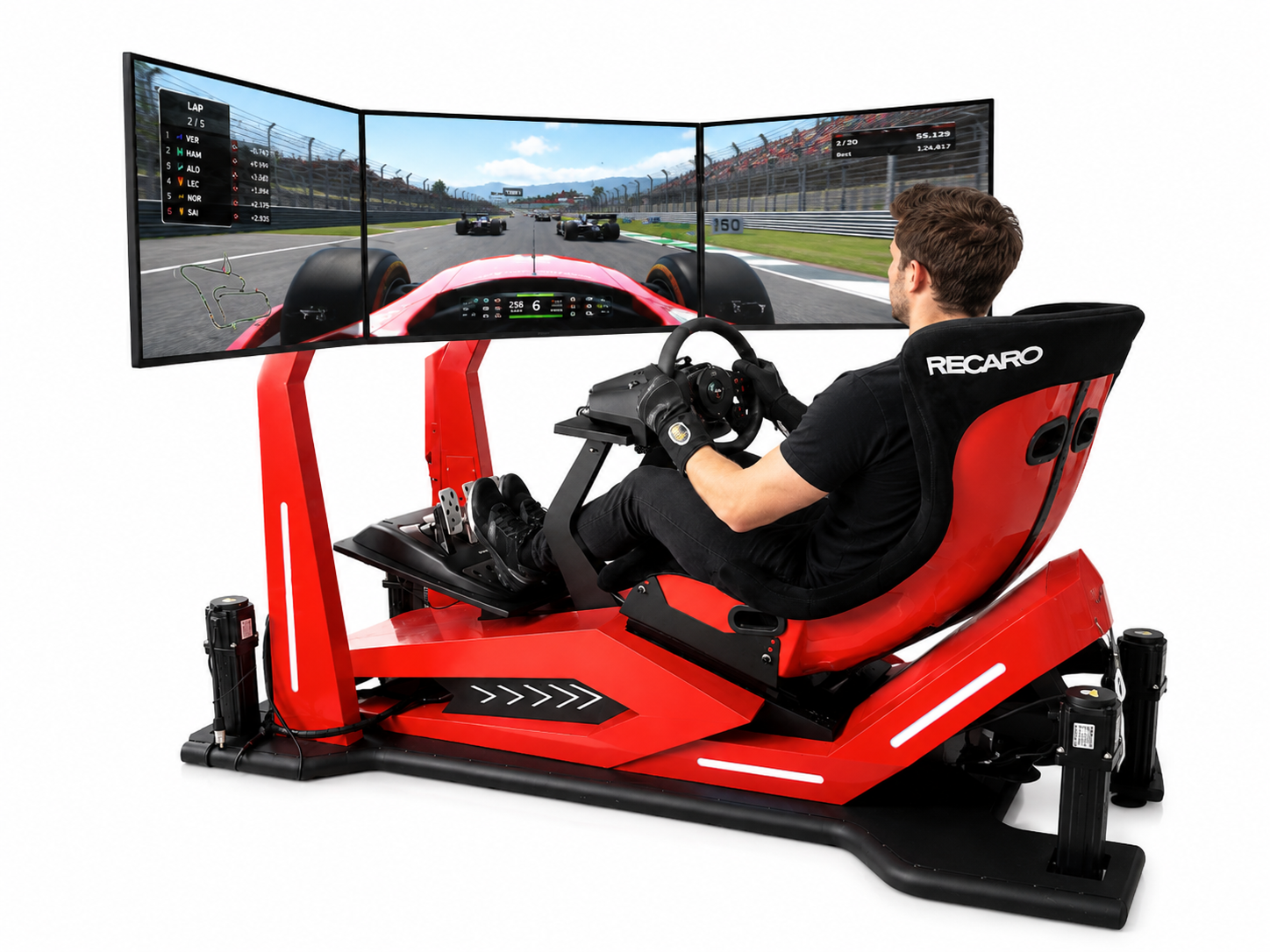
| VS600M Heavy Operator Simulator | Metal Frame / Electric 6-DOF | Industrial PC / Motion Cueing | Dual-HD / VR VR-Setup | Real-time G-Force | Contractor Safety Training, Operator Certification, WISHA Compliance |
Integrating Heavy Equipment Simulators into Seattle Safety Protocols
Modern job site safety regulations enforced by Washington State Division of Occupational Safety and Health (DOSH) and WISHA mandate rigorous equipment operator verification. UPT Machinery leads the industry by combining direct factory wheel loader manufacturing with high-fidelity 9D VR and motion-sensing cockpit simulators (such as the 9D VR Indoor Truck Driving Simulator VS600M and 6-Axis Motion Cockpits).
By pre-training operators on dynamic force-feedback simulators before placing them behind the controls of a 17-tonne heavy wheel loader, Seattle logistics contractors achieve zero-accident onboarding, reduce real-world machine wear-and-tear, and lower machine idle fuel consumption during initial training cycles.